 BAUDOG The dictionary of dog–human communication
Contents
- The finished behavior
- Assessment: where is your dog now?
- The cue
- How to signal
- Teaching steps
- When to reward
- Where “Stand” comes in handy
- “Stand” vs. “Beg” (sit pretty)
- If a trainer came to your home: the first session and the first homework
- A good sign to move on
- If it isn’t working
- Prescription: a suggested order
- In the moment: do / don’t
- When to see a professional
- Sources
The finished behavior
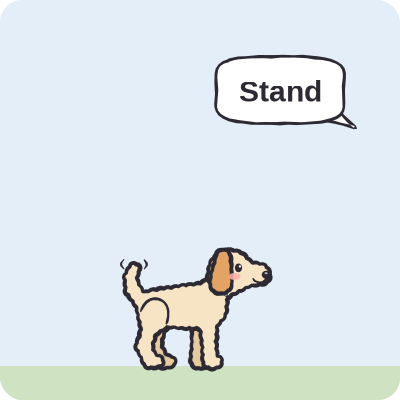
On “Stand,” she rises from a sit or down onto all four feet and holds still. Wiping her paws, putting on a harness, brushing her, a vet checking her over — a dog who can stand still makes everyday care easier.
Assessment: where is your dog now?
A visiting trainer might check something like this at home before starting.
From a sit, if you draw a treat straight forward from her nose, does she stand up?
→If she just stretches her neck and stays sitting, that’s common in dogs who’ve been rewarded a lot for sitting (AKC). Try a brighter, more upbeat voice, or lure from a down instead.
Once she stands, does she keep walking forward?
→You may be drawing your hand too far. In Battersea’s method, the treat stays at her nose only until she stands, and you praise as soon as she’s up — the hand signal itself moves only about 6–12 inches, or 15–30 cm. “Yes” the instant she stands, and keep the hand movement short.
Is she comfortable having her paws, belly and back touched?
→If not, build standing-while-handled with Touch Then Treat, starting with the places she’s fine with.
Does getting up look hard for her, or are her back legs wobbly?
→Get her checked by your vet before training (see “When to see a vet or behavior professional” below).
The cue
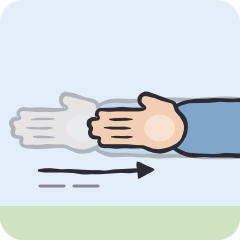
The hand signal is a smaller version of the lure — drawing your hand straight forward from her nose, parallel to the floor. There’s no fixed form, so the family just needs to use the same movement. It’s a different cue from “beg” (sitting up on the hind legs). The method below is the one described by the UK charity Battersea and the American Kennel Club (AKC).
How to signal
- Voice
Say “Stand” once. Add the word only after she stands reliably for the hand movement.
- Hand
Hold a treat at her nose and draw it straight forward, parallel to the floor. Raise it and she’ll go up on her hind legs; lower it and she’ll lie down. Once that’s easy, make the same movement with an empty hand and pay from the other hand.
- Leash
No leash needed indoors. Never pull on the leash to make her stand.
- Body
Start in front of her. Don’t lift her up into a stand. Once she stands, move to her side and work on touching her paws and belly.
Teaching steps
- 1
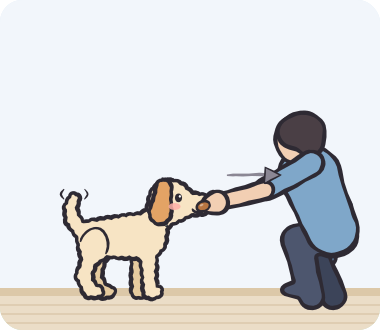
From her nose, straight forward At home, quiet
Lure with a treat
While your dog is sitting, draw a treat straight forward from her nose, parallel to the floor. The instant she’s on all four feet, “Yes” → treat to her mouth while she’s still standing.
A good sign to move onShe stands for the lure 8 out of 10 times (our rule of thumb)
- 2
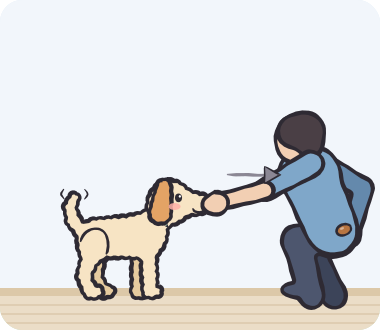
One hand guides, the other pays At home, quiet
Lose the treat from the luring hand
Make the same movement with an empty hand. When she stands, “Yes” → treat from your other hand. If she won’t follow the empty hand, go back to a hand with a treat a few times, then try again (see the troubleshooting below).
A good sign to move onShe stands for the empty hand 8 out of 10 times
- 3
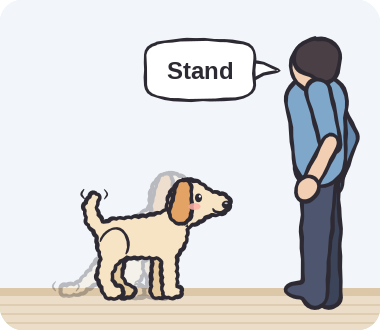
Word first, hand second At home, quiet
Add the word
Say “Stand” once, then give the hand signal. Make the hand movement a little smaller each time.
A good sign to move onShe stands to the word alone 8 out of 10 times
- 4
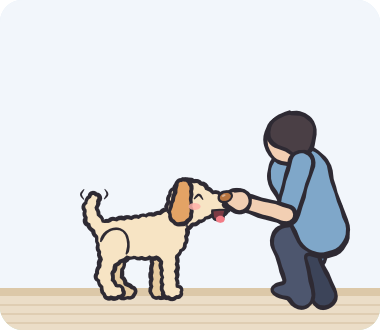
Pay while she’s standing At home, quiet
Hold the stand for 1–2 seconds
When she stands, wait 1–2 seconds, then treat to her mouth → “Free.” Lengthen it gradually, somewhere without other distractions.
A good sign to move onShe stands still for 5 seconds right in front of you, 8 out of 10 times
- 5
“Stand” before wiping paws At home, small distractions
Standing while being touched
Once she stands: touch her back → a paw → her belly for one second → treat. Build up to wiping a paw or one stroke of the brush. If she pulls away, go back one step.
A good sign to move onYou can wipe one paw while she stands, 8 out of 10 times
- 6
Handy during exams Around distractions
At the vet
In the waiting room or on the exam table: “Stand” → treat. Bring treats along and ask the vet to give her some too.
A good sign to move onAt the vet, she takes treats and can stand still
When to reward
Just right
“Yes” the instant she’s on all four feet. The treat goes to her mouth while she’s still standing.
Too late
The treat arrives after she sits back down or starts walking — and sitting or walking is what gets paid.
Where “Stand” comes in handy
The American Kennel Club (AKC) says a stand cue makes putting on a harness, wiping muddy or snowy paws, bathing, brushing and vet exams easier. The UK charity Battersea also says being able to stand still on all four feet helps with grooming and vet checks. A dog who lies down or tries to escape on the exam table is easier for the vet to examine if she can stand still.
For senior dogs or dogs with sore joints, sitting can be uncomfortable. Battersea recommends talking to your vet if sitting looks uncomfortable, and teaching another position instead, such as standing still or lying down.
“Stand” vs. “Beg” (sit pretty)
On this page, “Stand” means standing still on all four feet. Sitting up on the hind legs with the front paws raised — “beg” or “sit pretty” — is a separate trick. The lure goes in a different direction: for stand, straight forward; for beg, upward. Raise your hand too high and she’ll come up on her hind legs, so for stand, keep the treat at nose height as you draw it forward.
If a trainer came to your home: the first session and the first homework
Here is one example of how a visit from an in-home dog trainer might go, put together by BAUDOG. Stand is often taught alongside a care problem, like wiping paws or brushing.
- Today: the trainer shows the hand movement (forward, at nose height), then hands over to you for ten reps of step 1. Right there, they check that your hand isn’t rising and that the treat arrives while she’s still standing.
- Homework (for example): twice a day, about 3–5 minutes each. Work through steps 1–3. Make it part of daily life: back from a walk, at the front door, “Stand” → wipe one paw → treat.
- What gets checked next visit: does she stand to the word alone, and can she hold it for 5 seconds? Our rule of thumb is 8 out of 10; then standing while being touched becomes the next homework.
A good sign to move on
- Once she stands to the word alone 8 out of 10 times, start building how long she holds it (our rule of thumb)
- Raise only one of hold time, distance or distractions at a time. The AKC suggests waiting until she can hold a stand for about 30 seconds before you start stepping away
- When you work on touching, go back a step at the first sign she’s uncomfortable (freezing, turning her head away, a quick lick of the lips)
- If she struggles, go back one step (our rule of thumb: she misses twice in a row)
If it isn’t working
She stays sitting and won’t get up
Dogs who’ve been rewarded a lot for sitting sometimes stay planted (AKC). Clap or use a bright voice to get her moving first, then lure. Battersea and the AKC both describe starting from a down instead, and some dogs find it easier to stand up from a down. Switching to a treat she likes more is another option.
She won’t follow an empty hand
Do a few reps with a treat in your hand, then go back to the empty hand. Battersea describes holding the treat between your palm and thumb for three signals in a row, then doing the fourth with the same movement and an empty hand. If she still won’t follow, rubbing a strong-smelling treat on your fingers before luring is one more idea (AKC).
She stands, then sits straight back down
Give the treat while she’s still standing. If it arrives after she sits again, sitting is what gets paid. Keep a treat ready in your other hand so it isn’t late.
She stands, then walks off
If you draw your hand too far, she follows it. Stop your hand the instant she’s up and say “Yes.” Keep the movement short.
She jumps up on her hind legs
That isn’t a stand — it’s jumping up. Check that your hand isn’t too high. Teach not jumping on people with “Off” and the Four on the Floor Greetings practice.
Prescription: a suggested order
BAUDOG’s recommended order. Teach the stand itself with the steps above; these two practices then make it a stand you can use for grooming and care.
- ExerciseCharging Your Marker Word: How to Teach Your Dog That “Yes” Means a RewardDoable at home (Steps 1–4 at home)Lets you pinpoint the moment she’s on all four feet with “Yes.”Read →
- ExerciseTouch Then Treat: Help a Dog Who Hates Being Handled Learn to Enjoy ItDoable at home (Steps 1–5 at home)Gets her comfortable having her paws, belly and mouth touched while she stands, so you can use “Stand” for paw wiping, brushing and vet exams.Read →
In the moment: do / don’t
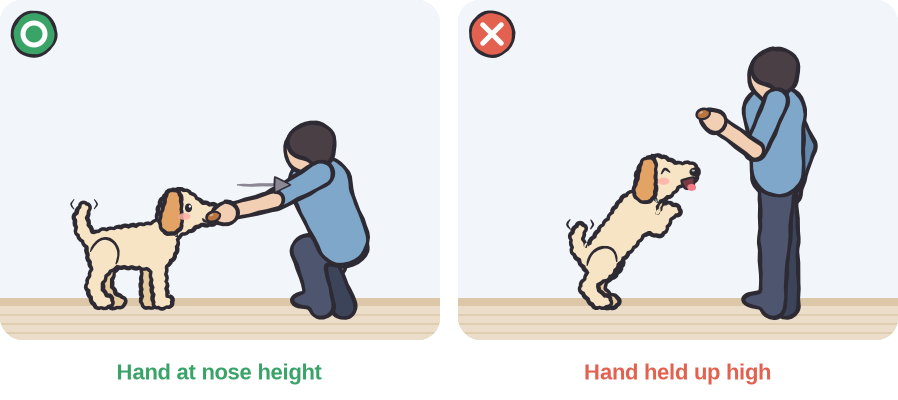
Do
- Keep the treat at nose height and draw it forward, parallel to the floor
- Bring the treat to her mouth while she’s standing
- Start touch practice where she’s comfortable, one second at a time
Don’t
- Lifting her by the belly or body into a stand
- Pulling on the leash to make her stand
- Carrying on touching her when she’s clearly uncomfortable
When to see a professional
- She takes a long time to get up, her back legs are wobbly, or she avoids standing still. This can be a sign of hip or other joint pain
- She suddenly can’t stand, walks unsteadily, or is painful when you touch her back. This can be spinal (disc) disease — see a vet right away
- She growls or tries to bite when touched while standing. Have your vet check for pain or another physical cause, and plan the handling practice with a behavior professional
The skills behind this command
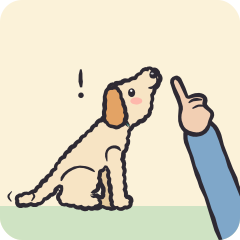 Core skill Understanding Cues Telling “Sit,” “Down” and “Stand” apart, by word and by hand signal.
 Core skill Comfort with Handling Staying relaxed while being touched as she stands. Stand is the doorway to grooming and vet exams.
- ExerciseCharging Your Marker Word: How to Teach Your Dog That “Yes” Means a RewardDoable at home (Steps 1–4 at home)Read →
- ExerciseTouch Then Treat: Help a Dog Who Hates Being Handled Learn to Enjoy ItDoable at home (Steps 1–5 at home)Read →
Sources
- Battersea Dogs & Cats Home — How to teach a dog to stand
- American Kennel Club — How to Teach Your Dog to Stand on Cue
- American Kennel Club — Teach Your Dog to Sit (the “sit pretty” steps)
- Battersea Dogs & Cats Home — How to teach your dog to sit
- Dogs Trust — How to train your dog to stay
- RSPCA — Understanding your dog’s body language
- VCA Animal Hospitals — Hip Dysplasia in Dogs
- VCA Animal Hospitals — Disc Disease in Dogs
- AVSAB — Position Statement on Humane Dog Training (2021)