 BAUDOG The dictionary of dog–human communication
Contents
In short
Licking people is thought to grow out of puppyhood, when pups lick their mother’s mouth. Adult dogs do it for many reasons: to greet you, to get your attention, because your skin tastes of salt or food, out of excitement, or to soothe themselves when they’re worried. Almost anything you do in response — laughing, talking, even pushing her away — counts as attention, so the licking tends to grow. A loose, wiggly body and a sweeping tail usually mean a greeting or an invitation to play; leaning in while turning her head away, or a tucked tail, can mean “give me some space.” If you’d like less licking, don’t scold her. Teach a greeting that doesn’t reach your face, and give her something else to lick.
When you see it
- You come home, crouch down, and your dog wriggles up to lick your face and the corners of your mouth
- She wakes you in the morning by licking your face
- When you’re crying, she comes over and licks your face
- She heads straight for the faces of guests and children, and won’t stop
- On the couch she licks your hands — or your feet and ankles — over and over
What it may mean
Around weaning, puppies lick their mother’s mouth to get her to bring up food for them. Adult dogs licking around a person’s mouth is thought to come from this behavior. Between dogs, licking each other’s faces is also one of the grooming behaviors that keep relationships friendly.
There isn’t just one reason. The Royal Kennel Club in the UK lists affection, wanting your attention, soothing herself when she’s stressed, and the taste of your sweat or food. And because people nearly always react to a lick, puppies learn that licking people pays off. Smiling and chatting count — but so do pushing her away and saying “stop.” To a dog, all of it is attention.
Licking can also mean “please back off.” A vet-written guide on PetMD describes dogs who lick hard while their pupils are wide, their tail is tucked and they lean forward but keep turning their head away: they may be using the lick to put distance between themselves and the person.
Assessment: where is your dog now?
When she licks your face, look at her whole body and the situation. Here is one way to read it — BAUDOG’s suggested checklist.
Is it a happy moment — you’ve just come home, it’s morning, a game is about to start?
→If her body is wiggly and loose and her tail sweeps, it’s usually a greeting or a “let’s play.”
Does the licking increase when you laugh, pet her or talk to her?
→She may be licking for attention — she has learned that it works. See “How to stop it kindly” below.
Have you just exercised, eaten, or put on hand cream?
→She may be drawn by the taste or the smell. Some skin creams are dangerous for dogs — see the safety section.
Is she leaning in while turning her head away, tucking her tail, or showing wide pupils? Are you hugging her or leaning over her?
→This can mean “give me space.” Stop what you’re doing and move back a little.
Does she lick people, things and herself all day long?
→Anxiety, or a physical problem such as pain or itching, is possible. Talk to your vet.
Face, ears, hands or feet: does the spot matter?
Mostly it comes down to smell and taste. Dogs Trust, the UK dog welfare charity, explains that dogs go for faces and ears because of interesting smells — around your mouth after you’ve eaten, for example — and for hands and feet because of food smells or something you’ve stepped in. Washing those smells off should help.
Sweaty skin is salty, which is why many dogs lick more after you’ve exercised. Food traces and scented lotions on your hands and face draw them in too.
Morning licks: the Royal Kennel Club suggests they may be a greeting after a night apart, or the taste of the sweat and oils our skin gives off while we sleep.
If she licks her own paws rather than you, that’s a different question with different health causes — see “Why dogs lick their paws.”
How to stop it kindly (no scolding)
Licking is natural for dogs, so rather than punishing it, set things up so she gets your attention without licking. The Royal Kennel Club suggests moving the part of you that’s being licked away without reacting, giving her something else to do such as a chew toy or a food puzzle, and teaching an alternative — sit, give a paw, roll over — that earns your affection and attention. The steps below are BAUDOG’s suggestion, built on that advice.
- When she starts licking, don’t laugh or push her away. Quietly stand up and move your face out of reach. No reaction tells her licking doesn’t get her anything.
- Instead, when she keeps all four feet on the floor or stays sitting, crouch down and pet her or hand her a treat (exercise: Four on the Floor).
- When you come home, wait a moment for the excitement to settle before you crouch down to say hello.
- For a dog with a strong urge to lick, give her something she is allowed to lick — a lick mat spread with something tasty — and time with food puzzles.
- Teach new tricks (down, roll over) so she has more things to do instead of licking.
- If she licks most after your workouts, shower first, and wash food smells off your hands and feet. Give her plenty of exercise and things to do, praise her when she’s calm rather than scolding when she licks, and make sure everyone at home responds the same way.
Is it safe to let your dog lick your face?
Whatever you’ve heard, a dog’s mouth isn’t especially clean: it is full of its own natural bacteria, and saliva may carry parasites — although the Royal Kennel Club says the chance of becoming ill from a face lick is probably very small. The US Centers for Disease Control and Prevention (CDC) says most people who have contact with a dog or cat do not become sick. But germs in dog saliva can make people ill if they get into an open wound or sore, and people with weakened immune systems are at higher risk of infection and serious illness.
Don’t let your dog lick you if your immune system is weakened by illness or by medicines such as chemotherapy, if you don’t have a spleen, or if you have a cut or broken skin on your face or hands. If you’re allergic to animal saliva, it’s probably wiser to avoid licks too. If you do let her lick your face, wash it with soap and water afterwards (Royal Kennel Club’s advice). VCA Animal Hospitals, a US veterinary hospital group, goes further and recommends avoiding face licks for everyone’s health and safety.
Children: keep children from getting too close to a dog’s face, and have an adult supervise every interaction between young children and dogs.
Creams and medicines on your skin: some — psoriasis creams, for example — can be very poisonous to dogs. The Royal Kennel Club says never to let your dog lick you after you’ve used them.
Common questions
“Are dog licks kisses?” Sometimes they come close: affection is one of the reasons the Royal Kennel Club lists. But a lick can also be a request for attention, a taste of salt, or a sign of worry, so read it with her body and the moment rather than assuming every lick is a kiss.
“Does licking my face mean she thinks she’s in charge — or that she’s submissive?” We haven’t found research that explains licking in terms of rank. Board-certified veterinary behaviorists writing for VCA call “dominant” and “submissive” poor terms for describing a dog’s personality. Reading the situation — greeting, attention, worry — fits better.
“She licks my face when I cry. Is she comforting me?” Research shows that dogs respond to human emotions. In an exploratory 2012 study, dogs turned toward a person who was pretending to cry more often than toward someone talking or humming, and when a stranger pretended to cry, dogs sniffed, nuzzled and licked the stranger. The researchers said the simplest explanation was emotional contagion plus past learning — dogs rewarded before for approaching upset people — rather than deliberate comforting. Whether dogs mean to comfort us isn’t known. She may also be reacting to the salt on your face or to the change in how you’re acting.
“She licks strangers’ faces.” Some people dislike dogs, and children can be frightened. Ask the person first, and practice rewarding her for sitting calmly before she says hello (BAUDOG’s suggestion; exercise: Four on the Floor).
Skills to build
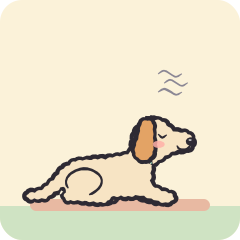
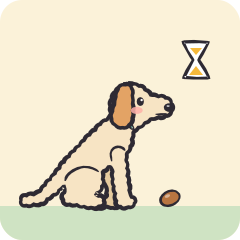
Exercises
Turn a licking, jumping greeting into a calm one. This is one example of what BAUDOG suggests.
When you see it: do / don’t
Do
- Read the lick from her body, her tail and the situation
- Crouch down and pet her when she stays calm without licking
- Give her things she’s allowed to lick (a lick mat, food puzzles)
- Wash off sweat and food smells, and keep her off skin with medicated creams on it
- Don’t allow licks for anyone with a weakened immune system or broken skin; supervise children with dogs
Don’t
- Scold her for licking or hold her mouth shut
- Laugh or push her away when she licks — it still rewards her
- Keep hugging her or leaning over her when her licks look like “back off” (head turned away, tail tucked)
When to see a professional
- She licks people, things or herself all day long, or the licking seems obsessive (including furniture, floors or walls). Anxiety, pain or itching are possible — see your vet
- She has suddenly started licking far more than usual
- Where she licks herself, her fur is stained reddish-brown, constantly wet or thinning, or the skin is sore
- For you: if she bites you, wash the bite with soap and water right away and call your doctor or go to an urgent care clinic, even if you feel fine (CDC)
- For you: if her saliva got into a cut or sore and the area becomes red, swollen, painful or oozing, or you develop a fever, see a doctor right away
Grow the skill underneath
Sources
- VCA Animal Hospitals — Why do dogs lick humans?
- The Royal Kennel Club (UK) — Why does my dog lick me so much?
- Dogs Trust (UK) — Why your dog licks you and what to do about it
- CDC — About Capnocytophaga
- Custance & Mayer (2012). Empathic-like responding by domestic dogs (Canis familiaris) to distress in humans: an exploratory study. Animal Cognition 15:851–859
- Siniscalchi, d’Ingeo, Minunno & Quaranta (2018). Communication in Dogs. Animals 8(8):131
- VCA Animal Hospitals — Canine Communication: Interpreting Dog Language (Horwitz & Landsberg, DACVB)
- Cornell Richard P. Riney Canine Health Center — Dog Bite Prevention (April 2025)
- PetMD — Why Do Dogs Lick Your Face? 7 Common Reasons