 BAUDOG The dictionary of dog–human communication
Contents
- The finished behavior
- Assessment: where is your dog now?
- The cue
- How to signal
- Teaching steps
- When to reward
- A word of caution if your dog already barks a lot
- Why teach “Speak” and “Quiet” together?
- A good sign to move on
- If it isn’t working
- Prescription: a suggested order
- In the moment: do / don’t
- When to see a professional
- Sources
The finished behavior
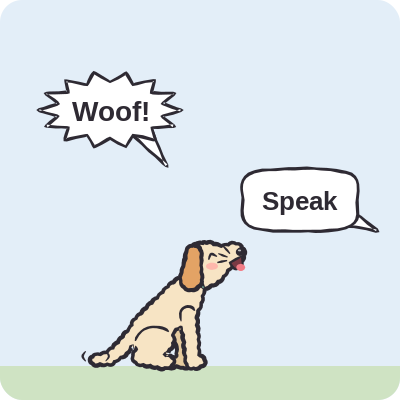
Say “Speak,” and your dog gives one “Woof!” and looks at you. Barking comes naturally to dogs, so this trick is surprisingly easy. The catch: only reward the single bark she gives on cue. Not rewarding any other barking is the best way to make sure the trick doesn’t turn into a barking problem. Most people teach it together with “Quiet.”
Assessment: where is your dog now?
Before you start, check a few things — for example, these three. If any apply, work on the barking problem first.
Does she already have a barking problem — at the doorbell, at visitors, barking for attention or food, at night?
→If so, we suggest leaving this trick for later. The more often barking pays off, the more some dogs bark. Start with the practices on our Stop Barking and Demand Barking pages.
When does your dog naturally give a single bark? (When you pick up a toy, when you invite her to play…)
→That moment becomes your first training setup. If she rarely barks, there’s no need to make her.
Do you live in an apartment or close to neighbors who’ll hear?
→If so, practice in the daytime, in short sessions. You can also reward quieter barks and work toward a soft “woof.”
The cue
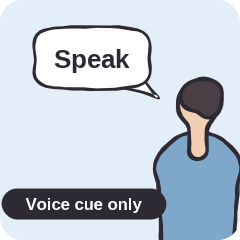
The spoken cue is “Speak.” BAUDOG’s hand-signal cards don’t have a shape for it yet. The American Kennel Club describes a commonly used one: start with an open hand, palm facing the dog, then repeatedly close your four fingers against your thumb. If you want a hand signal, add it once she knows the spoken cue.
How to signal
- Voice
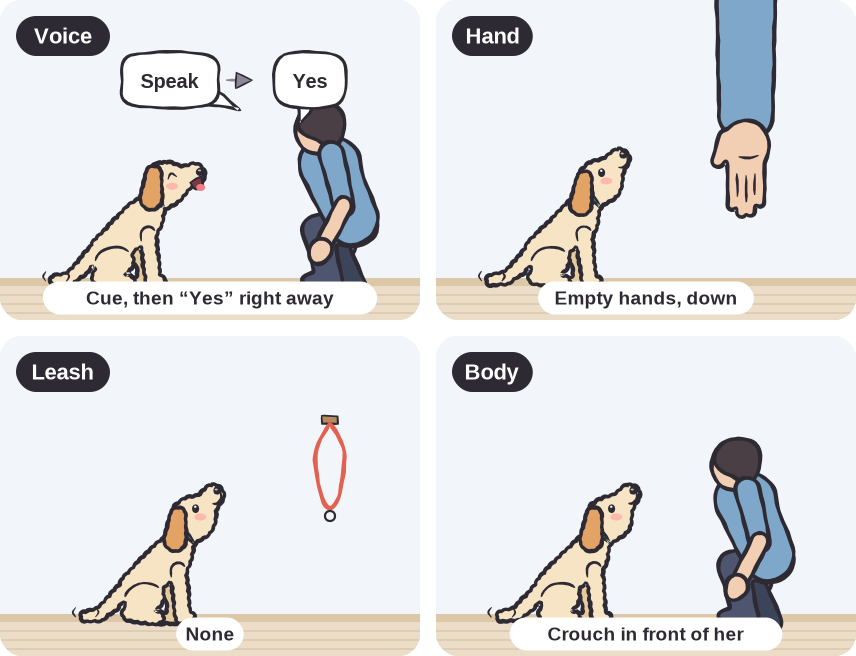
Say “Speak” once, just before she barks. “Yes” the instant she barks.
- Hand
None at first. Once the spoken cue works, you can add a hand signal. Don’t wave treats around.
- Leash
None (practice indoors).
- Body
Stand or crouch in front of her. It’s fine to move around a little, as if inviting her to play.
Teaching steps
- 1
“Yes” the instant she barks At home, quiet
Catch a natural bark
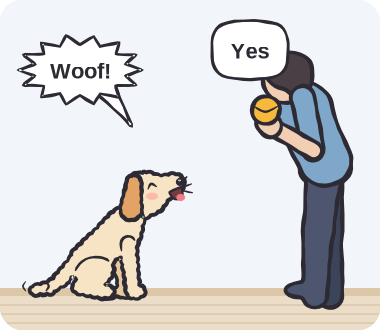
Set up a moment when your dog is likely to bark once — pick up a toy, invite her to play. The instant she barks, “Yes” → a treat (or throw the toy). Don’t say the cue word yet.
A good sign to move onIn that setup, she barks and looks at you, several times in a row
- 2
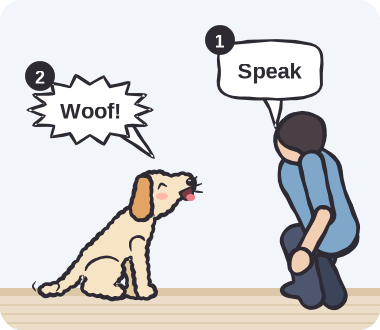
Word first, bark second At home, quiet
“Speak” just before she barks
When you can tell she’s about to bark, say “Speak.” When she barks, “Yes” → reward. One bark is enough. If she barks two or three times, don’t reward — wait for her to be quiet.
A good sign to move onShe barks once after “Speak”
- 3
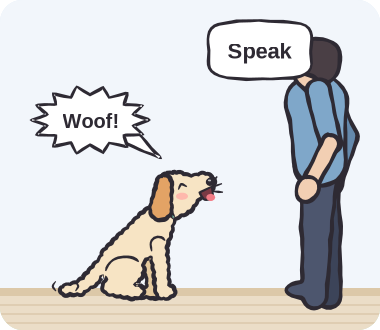
Fade the setup bit by bit At home, quiet
The word on its own
Without picking up a toy or inviting play, standing normally, say “Speak.” When she barks, “Yes” → reward. If you find yourself waiting several seconds for a bark, go back a step.
A good sign to move onOn the cue alone, she barks once within a few seconds
- 4
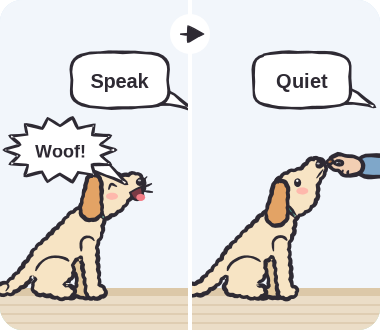
A cue to bark and a cue to stop, as a pair At home, quiet
Pair it with “Quiet”
After she barks on “Speak,” the moment she goes quiet, “Quiet” → reward. Alternating “Speak” and “Quiet” makes both cues clearer to her (see our Quiet page).
A good sign to move onShe barks once on “Speak,” then waits quietly
- 5
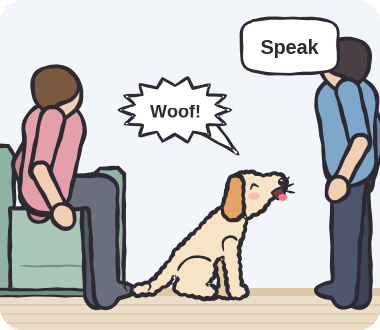
Now it’s a trick to show off At home, small distractions
In front of family, in other rooms
Practice with family watching and in different rooms. Reward only barks you asked for. Don’t respond to barking you didn’t cue.
A good sign to move onAnywhere in the house, she barks once on cue
When to reward
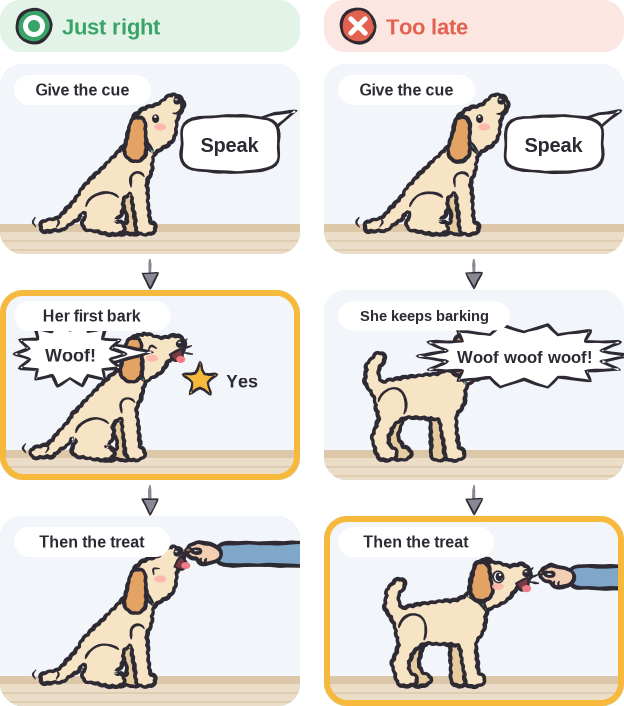
Just right
The instant the “woof” comes out, “Yes.” The treat comes after.
Too late
Rewarding after two or three barks in a row. “Speak” starts to mean “keep barking.”
The American Kennel Club also says to capture and mark only a single bark, and to reward barking only when you’ve asked for it. Battersea notes that once a dog learns “Speak,” she may bark more — especially if she can smell treats — and that teaching a “Quiet” cue is the best way to manage it.
A word of caution if your dog already barks a lot
“Speak” is a trick that rewards barking. In a dog who barks at the doorbell or visitors, or barks to demand dinner, it can strengthen the idea that barking gets results. For those dogs, we suggest leaving this trick for later and working on the barking problem first (see our Stop Barking and Demand Barking pages).
- Reward only barks you asked for. Barking you didn’t cue gets no treat and no attention
- Don’t use the doorbell, a knock or visitors as your setup — some guides do, but it can strengthen barking in exactly the moments you don’t want it
- Holding up a treat and waiting until she barks (a method Battersea describes) isn’t for dogs who already bark to demand things
- In an apartment, keep sessions short. Being mindful of neighbors is a point the American Kennel Club makes too
Why teach “Speak” and “Quiet” together?
Once barking is on cue, “Quiet” is easier to teach (American Kennel Club), because you can produce a bark in practice and then create the quiet moment that follows, over and over. Battersea also describes mixing “Quiet” into “Speak” training and stretching the quiet a few seconds at a time.
But if she’s barking at noises outside or at visitors, “Quiet” alone won’t remove the reason she barks (fear, guarding). For practice matched to the reason, see our Stop Barking page.
A good sign to move on
- When to add the word: in the setup, she barks and looks at you, again and again
- When to drop the setup: she barks once after “Speak,” again and again. Our rule of thumb is 8 times out of 10
- If you’re waiting several seconds for a bark, or she barks twice or more, go back a step
If it isn’t working
She won’t bark at all
There’s no need to make a dog bark who doesn’t want to. If nothing — play, a toy — naturally gets a sound out of her, pick a different trick. If a small “wuff” comes out, it’s fine to reward that.
Once she starts, she won’t stop
Don’t reward while she’s still barking; wait for her to go quiet. Reward the moment she does, and move ahead with “Quiet.” If she gets wound up easily, work on Play and Pause too.
Since learning the trick, she barks to ask for treats
Battersea also says dogs who learn “Speak” may bark more. Barking you didn’t cue gets no treat and no attention. Do more “Quiet” practice, and reward her when she waits without barking.
Can I teach her to “whisper” — a quieter bark?
Once she barks on cue, reward only the quieter ones, and you can teach a soft “whisper” bark too (American Kennel Club).
Prescription: a suggested order
Our suggested order.
- ExerciseCharging Your Marker Word: How to Teach Your Dog That “Yes” Means a RewardDoable at home (Steps 1–4 at home)With a clear “Yes” already in place, you can mark that one exact bark.Read →
- ExercisePlay and Pause: Teach Your Dog an “Off Switch” With TugDoable at home (Steps 1–3 at home)Practice for calming herself after excitement. It helps her go quiet again after “Speak.”Read →
In the moment: do / don’t
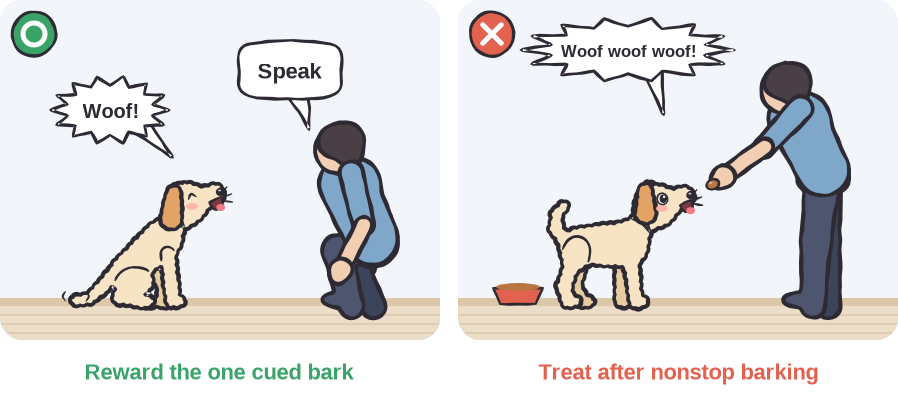
Do
- “Yes” the instant of the first bark
- Reward only barks you asked for
- Practice it together with “Quiet”
- Keep sessions short, and think of the neighbors
Don’t
- Reward after she’s barked several times
- Use the doorbell or visitors as your setup
- Tease a dog who demand-barks by holding up a treat until she barks
- Answer uncued barking with “Good girl”
When to see a professional
- She never used to bark much and suddenly barks a lot. Dogs Trust advises seeing your vet, because sudden behavior changes can mean a medical problem
- She no longer makes a sound on cue, or seems reluctant to bark. Something may be uncomfortable for her. Don’t push the practice — talk to your vet
The skills behind this command
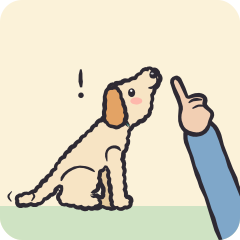 Core skill Understanding Cues Telling apart barking on cue from barking any other time. It grows because only the cued bark pays.
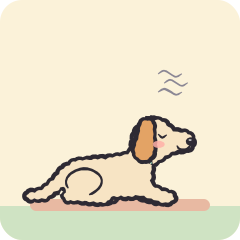 Core skill Settling Down Going quiet again after a bark instead of staying wound up.
- ExerciseCharging Your Marker Word: How to Teach Your Dog That “Yes” Means a RewardDoable at home (Steps 1–4 at home)Read →
- ExercisePlay and Pause: Teach Your Dog an “Off Switch” With TugDoable at home (Steps 1–3 at home)Read →
Sources
- American Kennel Club — How to Train Your Dog to Speak
- Battersea — Teaching your dog to ‘speak’ on command
- Dogs Trust — How to Stop Your Dog Barking: Causes & Triggers
- Humane World for Animals (formerly HSUS) — How to get your dog to stop barking
- ASPCA — Barking (we don’t recommend the mouth-holding or startle methods on the same page)