 BAUDOG The dictionary of dog–human communication
Contents
- In short
- When it happens
- How your dog feels
- Assessment: where is your dog now?
- If a trainer came to your home: the first session and the first homework
- How to stop leash pulling: stop when it’s tight, walk when it’s loose, reward at your side
- How to walk her while you’re still training
- Gear: collars, harnesses and leashes
- Owner injuries, and leashes in public
- The missing core skill
- Exercises
- In the moment: do / don’t
- When to see a professional
- Sources
In short
Your dog isn’t pulling to be “dominant.” Pulling got her forward — and every walk repeated the lesson until it became a habit. Dogs Trust puts it plainly: each time pulling gets a dog where she wants to go, the pulling gets stronger and more automatic. To stop it, the whole family agrees on one rule: she only moves forward while the leash is loose. Leash tight, you stop. Leash loose, you walk. At your side, she gets a reward. No leash jerks, no choke, prong or shock collars. Start the practice indoors, and until it’s solid, walk her on a well-fitting harness that keeps the pressure off her neck.
When it happens
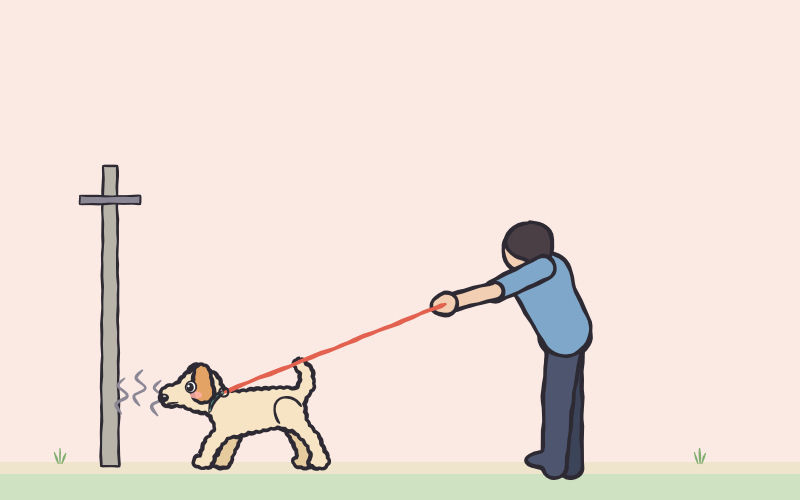
- The moment you step out of the front door, your dog hauls you down the street
- She lunges toward smells or other dogs
- The leash is tight the whole walk and she wheezes, gasps or makes a honking sound
- When you stop, she leans into the leash even harder
- You’ve nearly been pulled over by a big, strong dog
How your dog feels
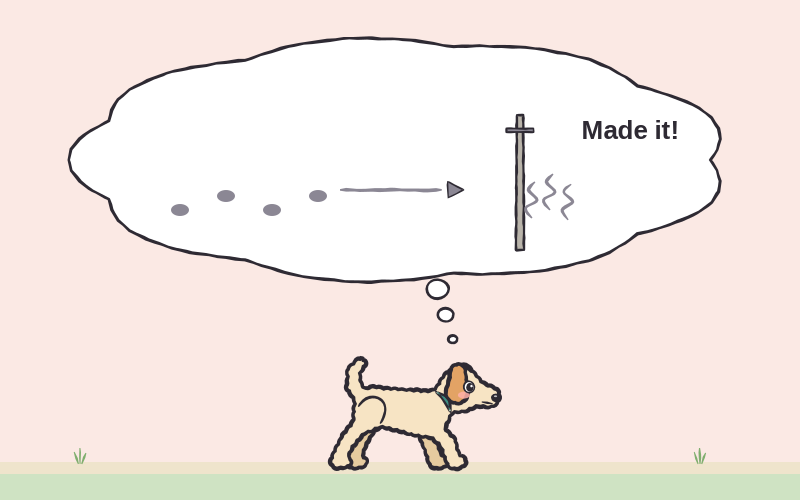
Dogs walk faster than people, and outside is full of smells and moving things she wants to reach. She pulled, and she got a little closer. To a dog, that’s the answer. Dogs Trust warns that just one step forward when your dog pulls tells her it works. Every walk on a tight leash is, in effect, pulling practice.
Excitement makes it worse. The UK veterinary charity PDSA says dogs pull when they’re excited or have lots of energy, and that some learn from a young age that pulling gets them forward. A study that measured leash tension on 370 walks with 111 shelter dogs found that younger dogs pulled more often.
Not all pulling is about getting somewhere. Dogs Trust notes that some dogs pull to get away from things that worry them, and that sudden pain can make a dog switch between pulling and stopping.
Assessment: where is your dog now?
Where and how she pulls tells you where to start. Look at these four things.
Where does she pull most? Right outside the door / the whole walk / toward smells and grass / when she sees other dogs or people
→Right outside the door: start with the excitement before you leave. The whole walk: start practicing indoors. Toward smells: set aside sniffing time. If she barks or lunges at other dogs or people, read “Barking at other dogs” too.
When you stop on a tight leash, does she turn back to you — or pull harder?
→If she turns back, stopping will work quickly. If she pulls harder, outdoors is still too hard for now — start with the indoor stage.
Does pulling make her wheeze, honk or cough?
→If she’s on a collar, switch to a harness today. If the noise or cough continues, see your vet — it can be a windpipe problem (see “When to call the vet”).
What is she on, and how do you hold it? (collar, harness, retractable leash, leash wrapped around your wrist…)
→Go through “Gear: collars, harnesses and leashes” below.
If a trainer came to your home: the first session and the first homework
Here’s how we’d expect a first in-home session to go — one example, not a fixed script. Pulling happens outside, but the practice starts indoors. Dogs Trust and Battersea both advise starting at home or in the yard, where there’s little to distract her.
- Today: check together that the harness fits, and look at the leash length and how you hold it. Step out of the front door and walk a little to see where she pulls. Then, back indoors: when she comes to your side, “Yes” and a treat by your leg (step 1 of Loose Leash Walking), and “Yes” whenever she looks up at you without being asked (step 1 of Check-Ins).
- Homework: steps 1–2 of Loose Leash Walking indoors, twice a day, about 5 minutes each. On walks, everyone in the family follows one rule: leash tight, stop; leash loose, walk. Expect walks to take longer while she’s learning — that’s normal.
- Next visit: indoors, when you stop on a tight leash, does your dog turn back so the leash goes slack? Our rule of thumb: if the leash goes loose within about 3 seconds of stopping, 8 out of 10 times, the next homework moves to the front of your house.
How to stop leash pulling: stop when it’s tight, walk when it’s loose, reward at your side
The RSPCA says the key is teaching your dog that not pulling is the quickest way to get where she wants to go. The step-by-step plan is in the exercise Loose Leash Walking. Here is the core the whole family has to agree on.
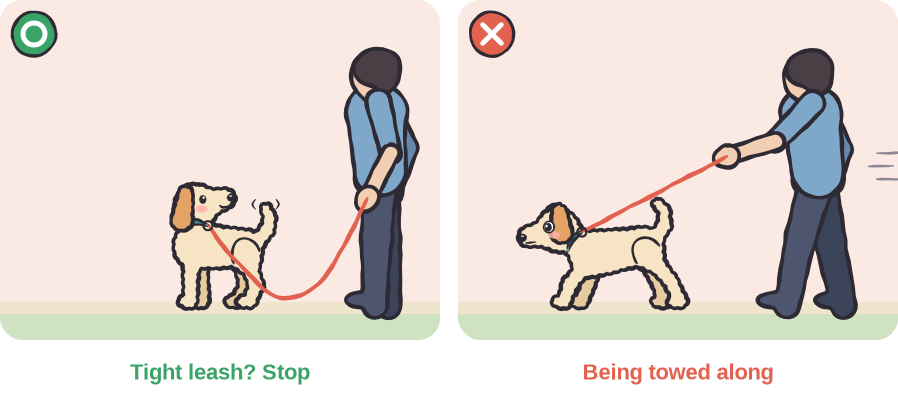
- The moment the leash goes tight, stop. Stand still and quiet, and don’t pull back. Don’t move forward until it goes slack (Dogs Trust, PDSA).
- If she doesn’t turn back, walk a couple of steps in the opposite direction to bring her attention back to you (Dogs Trust).
- When the leash is loose and she’s at your side, say “Yes” and give a treat by your leg. Feeding in front of your body draws her across your path (Battersea). Pick one side for her to walk on and stick to it.
- As she gets the hang of it, slowly increase the time and distance between treats (Dogs Trust).
- If even one person in the family keeps following her on a tight leash, the pulling stays. “Tight leash, stop” is the rule everyone keeps.
How to walk her while you’re still training
You can’t stop walking her while she learns, so find ways to cut down the time she spends pulling.
- Build plenty of sniffing time into every walk. Dogs Trust Ireland says sniffing exercises the brain and can tire a dog out as much as a brisk walk. Battersea suggests a release cue such as “off you go” to separate practice walking from free sniffing time.
- If she has energy to burn, play with her at home or in the yard before you head out (Dogs Trust, Battersea).
- Practice at quiet times and on quiet streets. When you have to go somewhere busy, don’t try to train there — keep it short.
- If there are days when you just can’t stop every time she pulls, Dogs Trust describes a two-harness method: one harness for days you don’t have time to train, which gives her “permission” to pull, and a different one for training walks and for every walk once she stops pulling. Dogs learn the difference, but Dogs Trust adds that it is likely to take longer for her to stop pulling this way.
Gear: collars, harnesses and leashes
A dog who pulls is better off in a harness than a collar. PDSA recommends a harness for dogs who pull, to help prevent neck injuries. In a study of 26 dogs, researchers applied the same pulling force through a collar and then through a harness and measured the pressure inside the eyes: it rose significantly with the collar but not with the harness. The authors recommend a harness rather than a collar for dogs with glaucoma or weak corneas, among others.
But a harness won’t fix pulling by itself. In a study of 52 shelter dogs comparing a neck collar with a back-clip harness, the dogs pulled harder and more steadily toward food when they wore the harness (there was no difference when pulling toward a toy, and no difference in stress-related behavior). A harness protects her neck; training is what stops the pulling.
Dogs Trust recommends a Y-shaped, fixed harness, and says a harness with both a front and a back clip, used with a double-ended leash, gives you extra support. It also warns to be wary of quick-fix “no-pull” products, which often cause pain or discomfort and lead to new problems such as fears — and reminds owners that equipment should support training, not replace it: until she’s taught, she’ll keep pulling. Some organizations, such as the San Francisco SPCA, recommend a head halter as a training aid, but a dog needs to be taught to accept one, so talk to a trainer before you try it.
- Leash: a standard leash about 1.2–2 m (roughly 4–6½ ft) long (Battersea). A retractable leash gives more length the harder she pulls, so it teaches her that pulling works (San Francisco SPCA, Dogs Trust). If you use one, lock it at a fixed length (Battersea).
- Don’t wrap the leash around your wrist. Hold the handle in one hand and the middle of the leash lightly in the other, so a sudden pull is less likely to throw you off balance (our suggestion).
- No choke chains, prong collars, shock collars or leash jerks. The American Veterinary Society of Animal Behavior (AVSAB) says trainers should avoid any tools that involve pain, such as choke chains, prong collars and shock collars, and PDSA says never to yank your dog back for pulling. The RSPCA warns that the repeated pressure of choke and prong collars can cause severe inflammation of the skin and muscle — in extreme cases, neck (spinal) injuries — and can make a dog cough and even cause the windpipe to collapse. Battersea advises avoiding slip leads, which tighten around the neck.
- There is research on punishment-based training too. A study of 92 pet dogs compared reward-based training schools with schools using punishment (mostly leash jerks, physical manipulation and yelling). Dogs at the schools that used a lot of punishment showed more stress behaviors, a bigger rise in stress hormones after training, and more pessimistic responses outside training.
Owner injuries, and leashes in public
Pulling can injure owners too. A review by UK veterinary researchers states that, excluding bites, being pulled over while walking a dog on a leash is the leading cause of non-fatal dog-related injuries in the UK. In US emergency-room data, the estimated number of people aged 65 and over who broke a bone in a fall while walking a leashed dog rose from about 1,700 in 2004 to about 4,400 in 2017. That study didn’t record whether pulling caused the falls; the researchers suggest training dogs not to lunge while leashed as one way to prevent them. If a big dog nearly pulls you over, don’t rush the outdoor stages — do the indoor steps first, and practice outside with a trainer.
In public, keep the leash in your hand and follow local leash laws. Rules differ from place to place. For example, New York City requires dogs in public places to be restrained by a leash no longer than six feet (1.8 m). In Great Britain (England, Scotland and Wales), the Highway Code says to keep your dog on a short leash on pavements, roads and paths shared with cyclists or horse riders, and on roads designated by the local council a dog must be held on a lead by law. Our advice: keep the leash loose most of the time, and shorten it when you pass people, dogs, bikes or traffic.
The missing core skill
Exercises
- ExerciseCheck-Ins: Teach Your Dog to Look at You Without Being AskedDoable at home (Step 1 at home)Without being called, your dog glances up at you now and then. On walks, after she looks at something interesting, she looks back at you.Read →
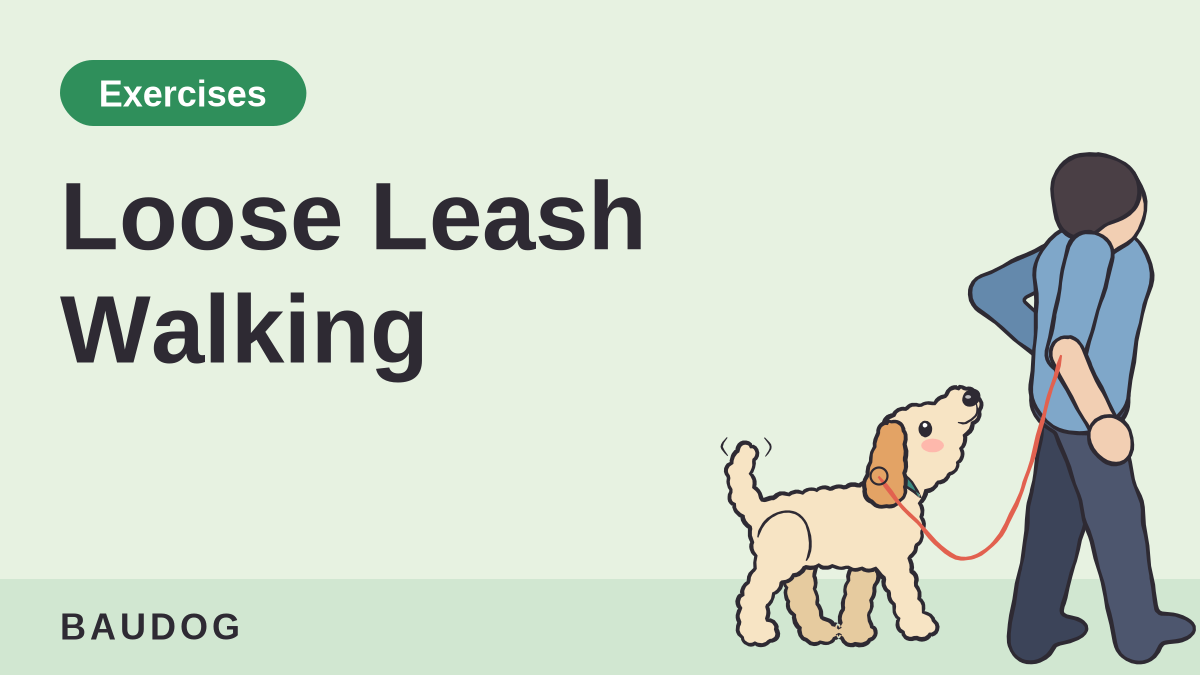
- ExerciseLoose Leash Walking: Stop When It’s Tight, Reward at Your Side (Starting Indoors)Start at home, finish outside (Steps 1–2 at home)Your dog walks somewhere near your side with the leash loose (hanging in a J). If it does go tight and you stop, she comes back on her own and lets it go slack.Read →
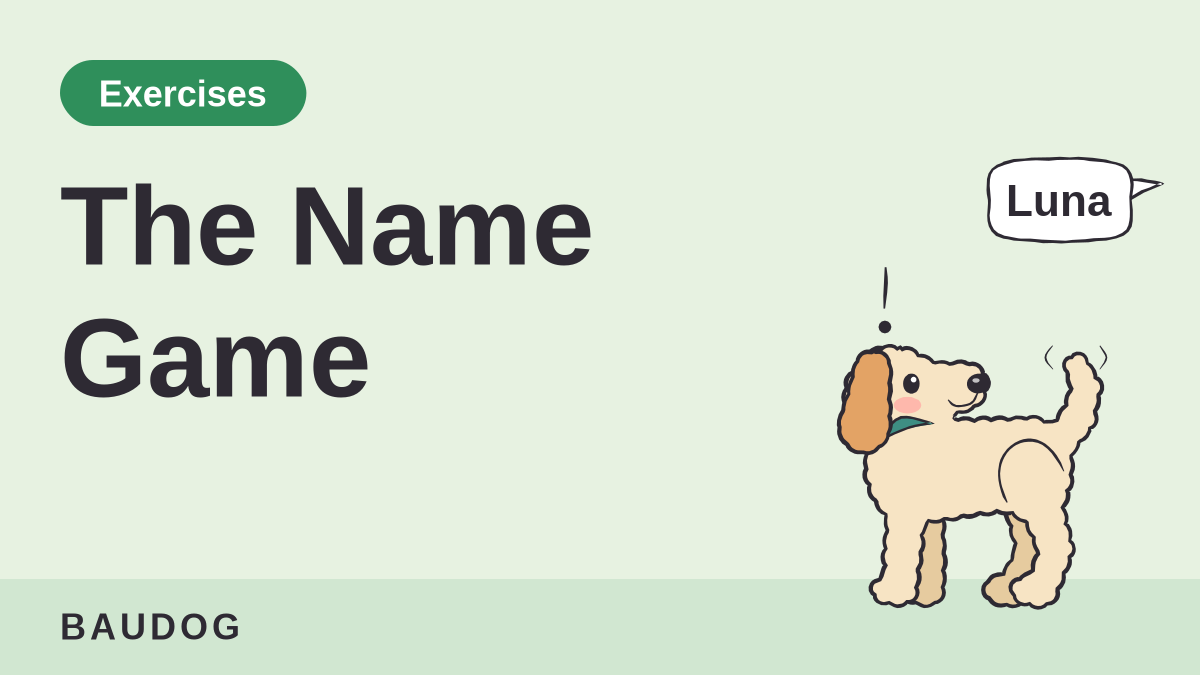
- ExerciseThe Name GameDoable at home (Steps 1–2 at home)You say (if her name is Luna) “Luna” once, and within 2 seconds she turns toward you.Read →
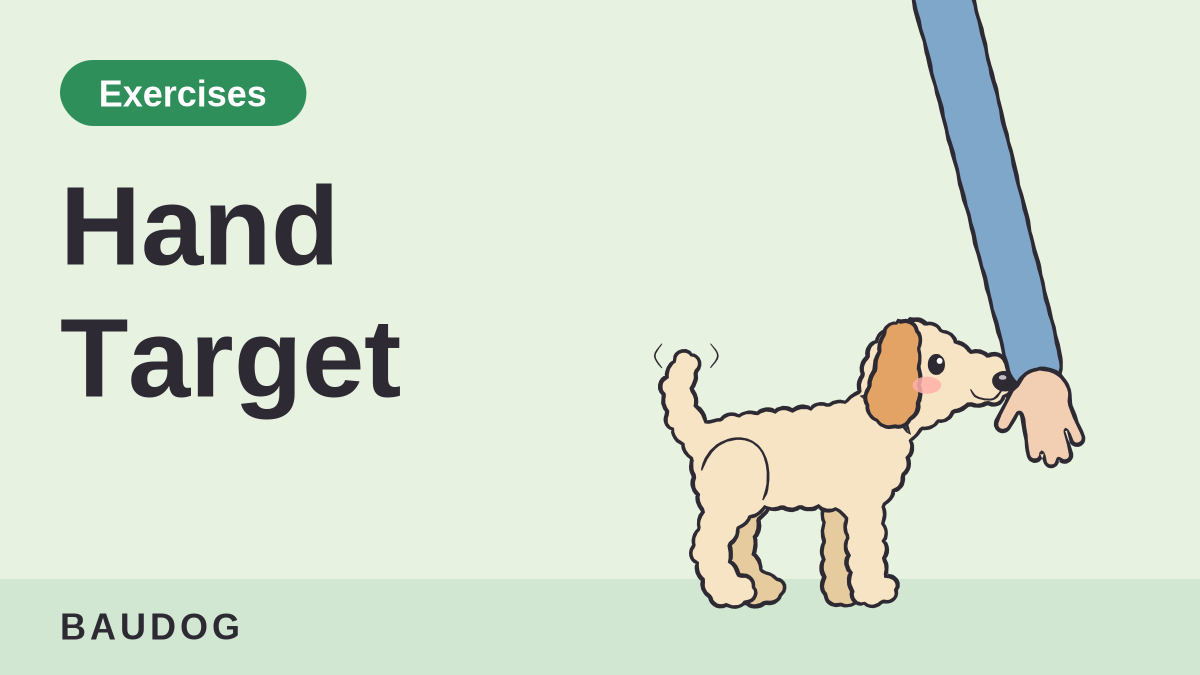
- ExerciseHand Target: How to Teach Your Dog “Touch” — and Use It for Recall and Passing Other DogsDoable at home (Steps 1–3 at home)When you hold out your palm, she comes over on her own and touches it with her nose.Read →
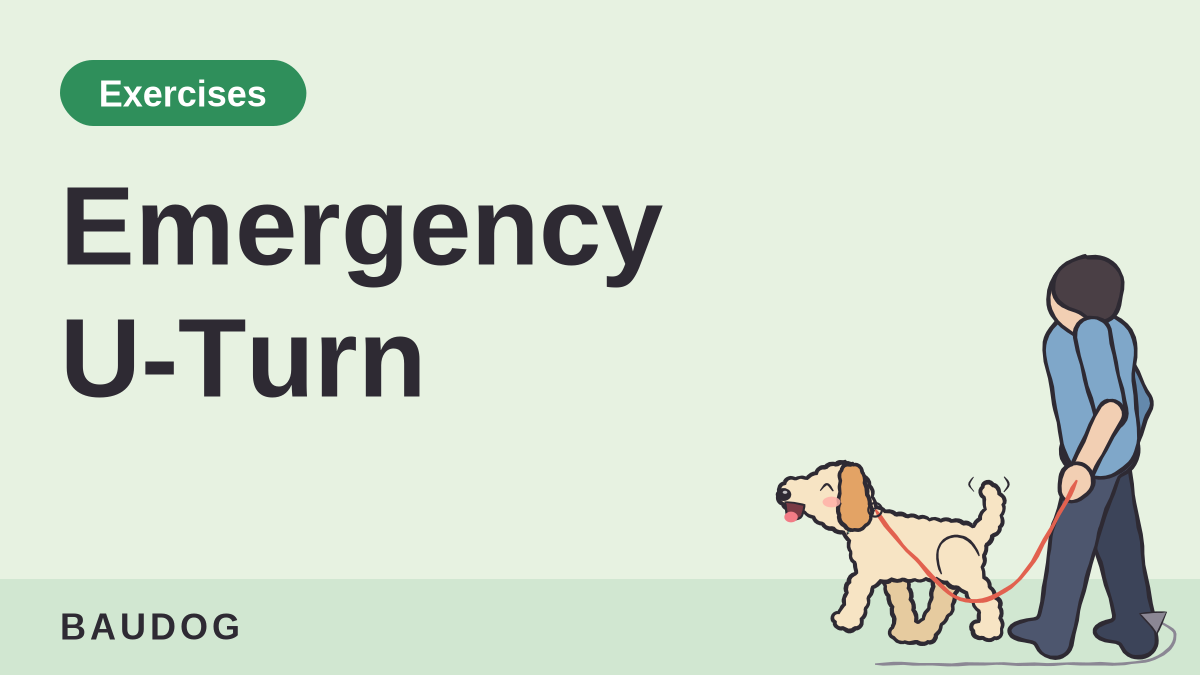
- ExerciseEmergency U-Turn: Teach Your Dog to Turn and Walk Away HappilyStart at home, finish outside (Steps 1–2 at home)You say “This way!” once, and your dog turns straight away and follows at your side. The leash stays loose.Read →
In the moment: do / don’t
Do
- Stop, quietly, the moment the leash goes tight
- Leash loose and she’s at your side: “Yes,” then a treat by your leg
- If she doesn’t turn back, take a couple of steps the other way
- Walk her on a well-fitting harness, not her neck
Don’t
- Follow her on a tight leash
- Jerk or pull back on the leash
- Use a choke, prong or shock collar
- Train on a retractable leash
When to see a professional
- Pulling makes her cough with a dry, goose-like honk, or breathe noisily. Switch from a collar to a harness, and if it continues, see your vet — it can be a collapsing windpipe (more common in toy and small breeds)
- She has suddenly started switching between pulling and stopping. Dogs Trust notes that sudden pain can cause this
- She lunges and barks at other dogs or people while pulling. This can be fear or frustration rather than pulling. Read “Barking at other dogs,” and if it’s strong, talk to a qualified behavior professional
- She’s a big dog and you can’t hold her when she pulls, or you’ve fallen. Start the outdoor practice with a trainer
Go to the root
Don’t stop at the quick fix. Growing the skill underneath makes other problems lighter too.
 Core skill Focus
- ExerciseCheck-Ins: Teach Your Dog to Look at You Without Being AskedDoable at home (Step 1 at home)Read →
- ExerciseLoose Leash Walking: Stop When It’s Tight, Reward at Your Side (Starting Indoors)Start at home, finish outside (Steps 1–2 at home)Read →
- ExerciseThe Name GameDoable at home (Steps 1–2 at home)Read →
Sources
- Dogs Trust — Dog walking problems: pulling on lead
- Dogs Trust — Teach your dog to walk nicely on a lead
- Battersea — How to teach your dog to walk on a lead
- PDSA — Training dogs not to pull
- RSPCA — Teach your dog to walk nicely on a lead
- RSPCA — Prong collars
- San Francisco SPCA — Loose-Leash Walking
- Dogs Trust (Ireland) — The importance of sniffing
- AVSAB — Position Statement on Humane Dog Training (2021)
- Pauli, Bentley, Diehl & Miller (2006). Effects of the application of neck pressure by a collar or harness on intraocular pressure in dogs. JAAHA 42(3):207–211
- Shih, Phillips, Mills, Yang, Georgiou & Paterson (2021). Dog Pulling on the Leash: Effects of Restraint by a Neck Collar vs. a Chest Harness. Frontiers in Veterinary Science 8:735680
- Shih, Georgiou, Curtis, Paterson & Phillips (2020). Behavioural Evaluation of a Leash Tension Meter Which Measures Pull Direction and Force during Human–Dog On-Leash Walks. Animals 10(8):1382
- Vieira de Castro et al. (2020). Does training method matter? Evidence for the negative impact of aversive-based methods on companion dog welfare. PLOS ONE 15(12):e0225023
- Townsend, Dixon & Buckley (2022). Lead pulling as a welfare concern in pet dogs: What can veterinary professionals learn from current research? Veterinary Record 191(10):e1627 (abstract)
- Pirruccio, Yoon & Ahn (2019). Fractures in Elderly Americans Associated With Walking Leashed Dogs. JAMA Surgery 154(5):458–459
- MSD Veterinary Manual (pet owner version) — Tracheal Collapse in Dogs
- The Highway Code (UK) — Rules about animals, Rule 56
- Road Traffic Act 1988 (UK), section 27 — Control of dogs on roads
- New York City Health Code Article 161, §161.05