 BAUDOG The dictionary of dog–human communication
Contents
- The finished behavior
- Assessment: where is your dog now?
- The cue
- How to signal
- Teaching steps
- When to reward
- What loose leash walking is — and why you don’t need to walk in front
- Equipment: a harness and a 4–6 ft leash
- Sniffing is part of the walk
- How long does it take? When can I start?
- Everyone in the family, the same way
- On public streets, keep a firm hold of the leash
- A good sign to move on
- If it isn’t working
- Prescription: a suggested order
- In the moment: do / don’t
- When to see a professional
- Sources
The finished behavior
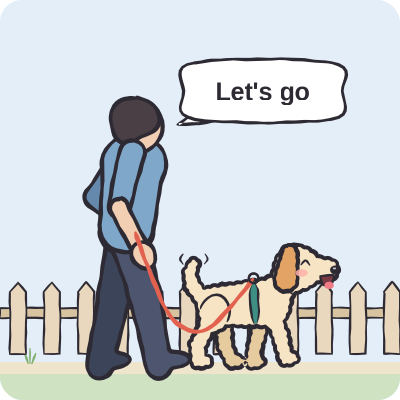
The leash hangs in a loose J while your dog walks near you. A little ahead or at your side is fine, as long as the leash isn’t tight. There’s time to sniff, too — it’s the way you walk every day. You’re teaching her two things: “a loose leash gets me forward, a tight one stops everything,” and “being near you pays.”
Assessment: where is your dog now?
Before you start, a trainer might check three things.
Do her harness and leash fit? Are you using a retractable leash?
→Sort the equipment first (see “Equipment” below). Gear that puts all the pressure on her neck, or a retractable leash, won’t let you practice properly.
Where on the walk does she pull hardest? (right out of the door, when she sees another dog, on the way home)
→Her hardest spot is the last place you practice. How to tell why she pulls, and how to fix it, is on Dog Pulling on the Leash.
Indoors, on leash, can she walk at your side?
→If even that’s hard, start indoors. If she can do it indoors, start in front of your house.
The cue
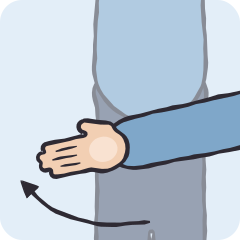
The cue to set off is “Let’s go.” For the hand signal, we use a forward swing of your palm in the direction you’re heading — it keeps it clearly different from the light thigh pat that means “Heel.” Agree on the word and the signal as a family. When you want to let her sniff freely during the walk, have a release cue such as “Free.” Battersea suggests clear cues so your dog can tell walking-on-a-loose-leash time from free-exploring time.
How to signal
- Voice
“Let’s go” as you set off. “Yes” the instant the leash is slack and she’s at your side.
- Hand
Hold the leash in the hand on the other side from her, and don’t stretch your arm out. Give treats by your leg on her side, not in front of your body.
- Leash
Tight leash, you stop (don’t turn back, don’t pull back). Loose leash, you walk. On public streets, keep a firm hold of the leash.
- Body
Stand tall. When you stop, stop dead, like a tree. Watch the leash, not her face.
Teaching steps
- 1
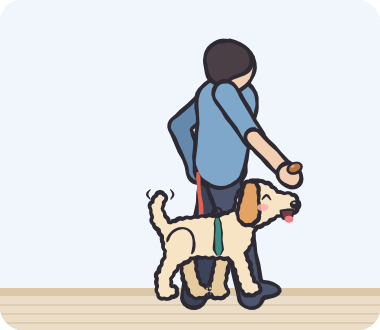
Treats go by your leg At home, quiet
Indoors: reward being near you
Walk around the house with her harness and leash on. Every time your dog comes to your side, “Yes” → a treat by your leg.
A good sign to move onIndoors, she walks about 10 steps at your side (our rule of thumb)
- 2
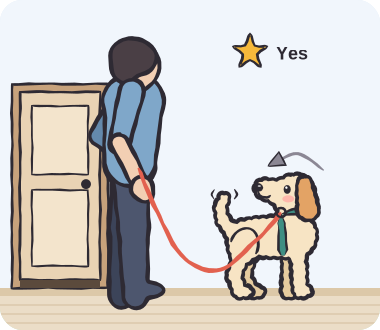
Tight leash, stop. Loose leash, go At home, small distractions
Indoors: tight leash, you stop
When the leash goes tight, stop where you are. When your dog turns back and the leash goes slack, “Yes” → set off. Tight, stop; loose, go — over and over.
A good sign to move onWhen you stop, she turns back within about 3 seconds and the leash goes slack (8 out of 10 times)
- 3
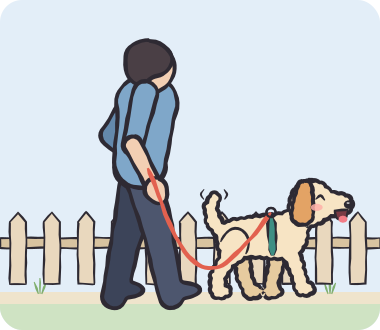
A little ahead is fine, if the leash is loose Yard, doorstep, outside the house
In front of your house, then a quiet street
Start with a few yards in front of your house. The first few minutes can be sniffing time. Outside, use better treats than indoors and reward more often. If she looks about to pull, say “Let’s go” cheerfully and turn the other way; when she follows, praise her.
A good sign to move on10–20 steps without the leash going tight, 8 out of 10 times (our rule of thumb)
- 4
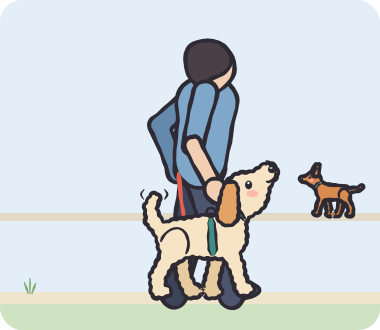
In hard places, keep your distance Around distractions
Near distractions
At the park entrance, or a street where other dogs are in sight. In hard places, reward more often and keep your distance. The detailed stages and homework are on the Loose-Leash Walking practice page.
A good sign to move on10 steps near the distraction without the leash going tight (our rule of thumb)
When to reward
Just right
The instant the leash goes slack and your dog comes to your side: “Yes” → a treat by your leg. When it goes tight, stop at once.
Too late
Giving a treat after she has pulled out ahead. Being towed a few steps before you stop. Both reward the pulling.
What loose leash walking is — and why you don’t need to walk in front
Loose leash walking simply means walking together while the leash stays slack. You may hear that you have to walk in front so your dog learns you’re the “pack leader,” or that a dog out ahead is trying to be in charge. You don’t, and she isn’t. The American Veterinary Society of Animal Behavior (AVSAB) points out that even in a wolf pack, the highest-ranking wolves lead the hunt only a fraction of the time. Dogs pull because they naturally walk faster than we do, the world outside is full of smells — and pulling has, over and over, got them where they wanted to go.
So what you teach isn’t rank; it’s a way of walking. A loose leash means she gets to move forward. Being near you means good things happen. You get that across with rewards. The point is a walk that’s comfortable for both of you — no pressure on her neck, nobody getting tripped. The idea behind the “leader” claim is covered on the Dominance Myth page.
Equipment: a harness and a 4–6 ft leash
- Harness: one that fits well and keeps pressure off her neck. For a dog who pulls hard, a front-clip harness (the leash attaches at the chest) is a good choice.
- Leash: an easy-to-hold standard leash about 4–6 ft (1.2–2 m) long (Battersea). Don’t practice with a retractable leash — it extends when she pulls, so pulling still gets her forward.
- Don’t use: choke chains, prong collars or shock collars. No leash pops (jerking the leash back), either.
- Small treats: something better outside than you use at home.
Sniffing is part of the walk
For a dog, sniffing is the best part of a walk. She doesn’t need to walk at your side the whole time. Use a cue like “Off you go” to give her time to sniff where she likes, then set off again with “Let’s go.” In an American Kennel Club (AKC) article, a trainer suggests that if you want less pulling, you give your dog more chances to sniff and choose where to walk.
A short play session before the walk can also take the edge off the pulling at the start.
How long does it take? When can I start?
Battersea says many puppies show progress within a few weeks, while adult dogs who have been pulling for a long time may take longer. Oregon Humane Society suggests thinking of a walk in time rather than distance: “I’ll walk for 30 minutes and stop every time she pulls” — even if you only get one block, the leash was loose.
Puppies can start getting used to a harness and leash, and practice walking near you indoors, as soon as they come home — before they can go outside (AKC). Ask your vet when it’s safe to start walks outside, including vaccinations.
Everyone in the family, the same way
If several people walk her, everyone uses the same method (stop when it’s tight, treats by your leg, the same cues). If even one person lets her tow them along, she learns that pulling sometimes works.
On public streets, keep a firm hold of the leash
Leash rules differ from place to place, so check yours. For example, New York City requires dogs in public places to be restrained on a leash no more than six feet long. In Great Britain (England, Scotland and Wales), the Highway Code says to keep a dog on a short lead on the pavement, the road and paths shared with cyclists or horse riders, and on roads designated by the local council a dog must be held on a lead by law. While you’re practicing, too, keep a firm hold of the leash.
A good sign to move on
- At each stage (indoors → in front of your house → a quiet street → near distractions), move on when she manages that stage’s number of steps without the leash going tight, 8 out of 10 times (our rule of thumb)
- Make it harder one thing at a time (number of steps, place or distraction — just one)
- On a bad day, go back to a quiet place and a short session
- Homework for each stage and the details of when to move on are on the Loose-Leash Walking practice page
If it isn’t working
Does she have to walk right beside me?
No. As long as the leash is slack, a little ahead or to the side is fine, and there’s time to sniff. Walking close at your side on cue is a separate skill — heel.
Which side should she walk on?
Either. Battersea’s advice is to choose one side and stick to it — and give treats by your leg on that side.
We keep stopping and hardly get anywhere
Do more practice indoors and in front of your house first. Play with her before the walk, or let her use up some energy on a sniffing game. Outside, reward more often.
She pulls really hard only at the start of the walk
Our advice: once the leash is on, wait until she settles before you open the door. The first few minutes outside can be sniffing time on “Free.”
She bites the leash or turns it into tug-of-war
Don’t let the leash dangle in front of her, and praise her often for staying near you and looking at you. Giving her a toy to carry on the walk can help. If the biting is getting stronger, see “When to get help” below.
She pulls all the time and I don’t know where to start
How you fix it depends on why she pulls (to sniff, to get to other dogs, to get away from somewhere scary). How to tell and how to fix it are on Dog Pulling on the Leash.
Prescription: a suggested order
The order we recommend: build the habit of checking in with you, then move on to loose leash walking. The U-turn is used inside the loose leash practice.
- ExerciseCheck-Ins: Teach Your Dog to Look at You Without Being AskedDoable at home (Step 1 at home)Builds the habit of looking up at you on her own as you walk. It raises the value of being near you.Read →
- ExerciseLoose Leash Walking: Stop When It’s Tight, Reward at Your Side (Starting Indoors)Start at home, finish outside (Steps 1–2 at home)The core of this page: walking at your side indoors → stopping when it’s tight → in front of your house → a quiet street → near distractions.Read →
- ExerciseEmergency U-Turn: Teach Your Dog to Turn and Walk Away HappilyStart at home, finish outside (Steps 1–2 at home)A cheerful change of direction when she’s about to pull, or when something she finds hard comes into view.Read →
In the moment: do / don’t
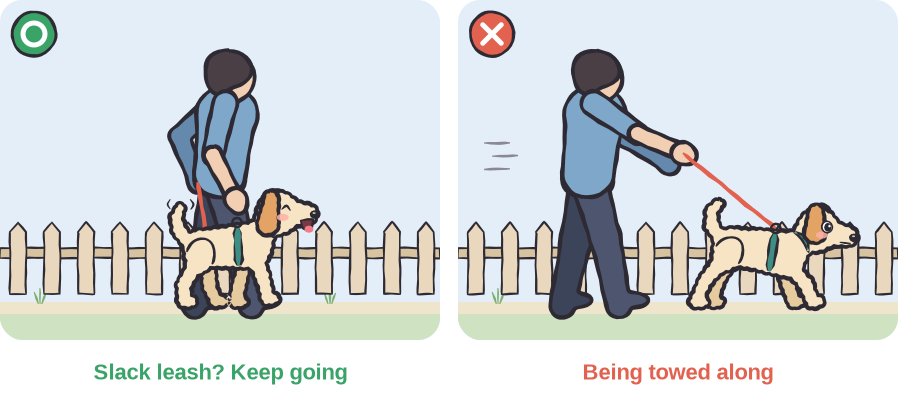
Do
- Stop the moment the leash goes tight
- When it goes slack, “Yes” and set off
- Give treats by your leg on her side
- Make time for sniffing (“Off you go”)
- Everyone in the family uses the same method
Don’t
- Jerk the leash to pull her back
- Keep walking while she tows you
- Use a retractable leash, choke chain, prong collar or shock collar
- Give a treat after she has pulled out ahead
When to see a professional
- Biting or grabbing the leash, or jumping up, is getting stronger
- She seems worried about walks or doesn’t want to leave the house
- You don’t feel strong or confident enough to stop her safely
The skills behind this command
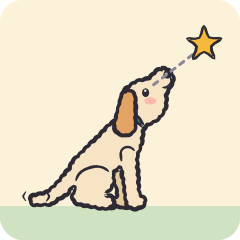 Core skill Focus Coming back to you now and then, even with smells and moving things all around.
 Core skill Impulse Control Waiting, without tightening the leash, when she wants to go somewhere.
- ExerciseCheck-Ins: Teach Your Dog to Look at You Without Being AskedDoable at home (Step 1 at home)Read →
- ExerciseLoose Leash Walking: Stop When It’s Tight, Reward at Your Side (Starting Indoors)Start at home, finish outside (Steps 1–2 at home)Read →
- ExerciseEmergency U-Turn: Teach Your Dog to Turn and Walk Away HappilyStart at home, finish outside (Steps 1–2 at home)Read →
Sources
- Battersea — Train your dog to walk on a lead
- San Francisco SPCA — Loose-Leash Walking
- Oregon Humane Society — Loose-leash walking
- American Kennel Club — Leash Training: How to Train a Dog or Puppy to Walk on a Leash
- American Kennel Club — How to Stop Leash Tugging and Biting When Walking
- American Kennel Club — Fun With Heeling: It’s Easy to Teach Your Dog to Walk Beside You
- AVSAB — Position Statement on the Use of Dominance Theory in Behavior Modification of Animals
- AVSAB — Position Statement on Humane Dog Training (2021)
- LSU School of Veterinary Medicine — Hand Commands for Communicating with Deaf Animals
- New York City Health Code Article 161, §161.05
- The Highway Code (Great Britain) — Rules about animals (47 to 58)
- Road Traffic Act 1988 (Great Britain), section 27
- American Kennel Club — Dog Training Duration, Distance, Distraction (the 3 Ds)
- Dogs Trust — Pulling on lead