 BAUDOG The dictionary of dog–human communication
Contents
- In short
- When you see it
- What it may mean
- Assessment: where is your dog now?
- Stress signals in the moment: from early whispers to panic
- Signs of stress that goes on for days
- Why she “suddenly” reacts: trigger stacking
- What to do when you notice stress signals
- Lowering everyday stress
- Common questions
- How this relates to “calming signals”
- Skills to build
- Exercises
- When you see it: do / don’t
- When to see a professional
- Sources
In short
Dog stress signals come in two kinds: signals you see in the moment (yawning, lip-licking, turning away, a tucked tail, trembling, hiding) and changes that appear when stress goes on for a while (appetite, sleep, accidents in the house, repeating the same behavior over and over). None of them means “stress” on its own. Dogs yawn when they’re sleepy and lick their lips after food. What matters is whether several signals show up together, and what just happened. When you spot them, first move her away from the cause and give her somewhere calm to settle. If the signals keep coming back, have your vet check for a medical problem.
When you see it
- In the vet’s waiting room she yawns again and again, and her body is trembling
- While you have visitors, she keeps pacing and licking her lips
- During thunder or fireworks she can’t stop panting and squeezes behind the sofa
- Since the move, or since she’s been left alone more, she keeps licking her paws and leaving food in her bowl
What it may mean
Stress is a dog’s body bracing itself against something unpleasant, frightening, or confusing — something she doesn’t know how to deal with. She can’t tell you in words, so it shows in her body and her behavior.
The same behavior can mean different things in different situations. In one study at the University of Pisa in Italy, 64 pet dogs went through a 19-minute test in a room none of them had been in before: being separated from their owner, left with a stranger, left alone and reunited. Lip-licking, shaking off, lifting a paw and similar behaviors didn’t simply rise as the situation got more stressful, and didn’t always change the way you’d expect (lip-licking was more common when the dog was reunited with someone than when she was left alone). The researchers recommend judging each behavior separately and in its context. So don’t decide “she’s stressed” just because one item on a list matches. Look at her whole body and the situation.
Fear and anxiety tend to get worse when the same frightening thing happens over and over. That’s why it matters to notice the small signals early and reduce whatever is causing them.
Assessment: where is your dog now?
When you spot a signal, check these four things. This is BAUDOG’s suggested way of looking — one example.
Are several signals happening at the same time?
→A yawn on its own may just mean she’s sleepy. A yawn plus turning her head away plus a stiff body points toward stress.
What just happened?
→A stranger, another dog, a loud noise, being picked up, grooming, being scolded: if a signal follows one of these, that’s your likely cause. Once you know the cause, you can move her away from it or make it smaller.
Just in that moment, or for days?
→If it’s only in the moment, she’ll recover once she’s away from the cause and has calmed down. If it goes on for days or is increasing (appetite, sleep, accidents, repeating the same behavior), think about ongoing stress, or a medical problem.
Could a health problem explain it?
→Trembling, panting, a poor appetite and constant licking can also be caused by pain or illness. If it started suddenly or comes with other symptoms, see your vet first.
Stress signals in the moment: from early whispers to panic
These are signals UK welfare charities and vets list for a dog who is scared, anxious or stressed. Dogs Trust groups them from subtle to intense. Don’t judge by one; look at how many appear together. Early signals are quick and easy to miss.
- Early, subtle signals: turning her head or body away, looking away, lip- or nose-licking (not about food), yawning (not about tiredness), blinking more, ears pulled back, eyes narrowing or the whites showing, pupils getting bigger, tension in the face and body, suddenly going still or freezing, a raised front paw, sniffing the ground, looking to you for reassurance.
- More obvious signals: lowering or tucking her tail, crouching or cowering, hiding, avoiding touch, trembling or shaking, panting or drooling when she isn’t hot or exercising, pacing or seeming unsettled, whining, barking or growling, not taking food or treats she normally loves, or rolling tensely onto her back with her tail tucked, ears back and a back leg raised — a sign she needs space now.
- Signals that look like excitement: jumping up, mouthing, mounting, or frantic bouncing can also be stress. Even an excited dog should still be able to respond to a cue she knows, like her name; if she can’t, or ignores treats and toys she’d usually care about, she may be more stressed or overwhelmed than happy.
- Intense fear or panic: trying to run away or escape, lunging, snapping or biting, or peeing or pooping without meaning to.
- Less obvious body signs: some stressed dogs leave damp paw prints (dogs sweat through their paw pads), or suddenly shed more or get dandruff.
- Afterward: a full-body shake, as if she were wet, once the tense moment has passed.
Signs of stress that goes on for days
When the same stress keeps going, you may see changes in her everyday life. All of these can also be caused by illness, so start with a vet check.
- Eating less, or a change in how she sleeps (restless at night, or sleeping much more)
- Low mood: less energy, not wanting to play or interact, hiding, or being more clingy than usual
- More accidents in the house
- Repeating the same behavior: licking her paws or body over and over, chasing or biting her tail, pacing endlessly. When it can’t be interrupted, vets may diagnose it as a compulsive disorder
- More barking or growling, or being afraid of more things
Why she “suddenly” reacts: trigger stacking
Dogs Trust explains that stress hormones rise with every event that excites or worries a dog during the day, and that when several come close together without time to recover in between, she can reach a tipping point. They call this trigger stacking. Their example: a dog snaps at a stranger who reaches to stroke her. It looks like it came out of nowhere — but that morning she played with an over-excited dog, went to the vet in the afternoon, and was scared by a loud motorbike on the way home.
After something frightening or overwhelming, Dogs Trust advises giving her time and space to rest and recover. One way to do that (our suggestion): after a vet visit, a houseful of visitors or a night of fireworks, plan a quieter day with fewer triggers.
What to do when you notice stress signals
- Move her away from the cause. With a stranger or another dog, increase the distance. With noise, close the curtains and put on music or the TV to mask it.
- Make sure she can get to a calm place (a crate or a covered bed in a quiet corner). If she hides, leave her be.
- If she comes to you, it’s fine to calmly pet and reassure her. You can’t reinforce a feeling by comforting it.
- Don’t scold her — not even for an accident caused by fear. Scolding can make her more frightened.
- Try to stay calm yourself. The more worried you get, the more worried your dog is likely to get.
- Once she’s settling, Dogs Trust suggests scattering a few treats on the floor for her to sniff out, or giving her something easy and enjoyable to do.
- Afterward, write down what happened: what the trigger was, how far away it was, what signals she showed. Video helps too. It’s the starting point for training, and useful to show your vet.
Lowering everyday stress
Dogs Trust says that meeting a dog’s physical, mental and social needs helps her feel calmer and cope better with stress. In practice:
- A cozy den or safe space where she can go for quiet time and not be disturbed
- Less exposure to the things that scare her — for example, vacuuming while she’s out of the house, or blocking her view of the street and playing the radio if outside noise and people worry her
- Daily walks in familiar and new places, with plenty of time to sniff and explore; play and easy enrichment such as treat trails or puzzle feeders
- Enough good-quality rest and sleep
- A predictable daily routine for meals, walks and play
Common questions
“What does an anxiety attack look like in a dog?” Dogs Trust lists shaking uncontrollably, panting and drooling heavily, going to the toilet or vomiting, barking, whining or howling, bolting, escaping or hiding, seeking comfort, jumping up, not responding to words, treats or toys, and aggressive behavior. Get her away from what’s frightening her, give her space and time to calm down, reassure her gently — and talk to your vet, because a medical problem can be involved.
“What are the signs that she’s at her limit?” A stiff body with a hard stare, growling and snapping are strong signals that come after the smaller ones weren’t noticed (see the “warning ladder” on our dog body language page). If you get there, move away from the cause right away and talk to your vet or a behavior professional.
“Should I stop the signals?” There’s no need to stop the signals themselves. What you want to stop is the cause. Cornell University warns that if a dog is punished for growling, she may skip the warning and go straight to biting. Our view is that yawning and lip-licking work the same way: scolding them won’t remove the cause, and may just make the signals harder to see.
“Is panting a sign of stress?” It can be. Panting or drooling when she isn’t hot, hasn’t been exercising and isn’t expecting food is on Dogs Trust’s list of stress signs. But heavy panting at rest can also be a sign of pain, so if you can’t find a reason, call your vet.
“Can stress give a dog diarrhea?” Yes, it can. VCA describes stress colitis as one of the leading causes of large-bowel diarrhea in dogs. But infections, parasites, food and other illnesses cause diarrhea too, so don’t assume it’s stress — call your vet and let them find the cause.
How this relates to “calming signals”
Yawning, turning away and sniffing the ground are also called “calming signals” — signals said to calm another dog, a person or the dog herself. But research hasn’t yet confirmed that they really calm others. Our calming signals page explains what we know and don’t.
Skills to build
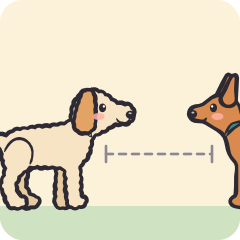 Core skill Confidence The skill of staying relaxed around new people, sounds and places, so the signals don’t need to appear. You turn scary things into “no big deal,” little by little.
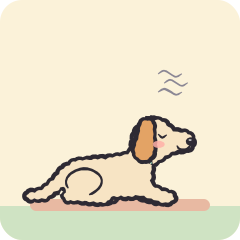 Core skill Settling Down Being able to let the tension go after something frightening and come back to a relaxed posture.
Exercises
Once you know the cause, practice getting used to it from far away and small. This is BAUDOG’s suggested example. Always work at a distance or volume where the signals don’t appear.
- ExerciseLook at That (LAT): The Game That Helps Reactive Dogs Stay Calm Around Dogs and PeopleStart at home, finish outside (Step 1 at home)Show her the person, dog or object she’s worried about from a distance where she stays relaxed, and give a treat when she looks. Looking at it becomes a signal that something good is coming.Read →
- ExerciseGetting Used to Sounds Step by Step: Sound Desensitization for DogsDoable at home (Steps 1–3 at home)Play thunder, fireworks or vacuum sounds very quietly and pair them with something good. If stress signals appear, turn it back down.Read →
When you see it: do / don’t
Do
- Check whether several signals appear together, and what just happened
- Move her away from the cause and give her a calm place to go
- If she comes to you, calmly pet and reassure her
- If signals keep going or increase, have your vet check her first
Don’t
- Scold or try to stop her yawning or lip-licking
- Push her toward what she fears, or keep exposing her to it to “get her used to it”
- Scold her for an accident caused by fear
- Decide “she’s stressed” because one item on a list matches
When to see a professional
- Trembling, panting or loss of appetite that started suddenly, or comes with other symptoms (lethargy, vomiting, signs of pain). A medical problem may be the cause, so see your vet first
- She licks her paws or body until the skin is red or the fur thins, chases and bites her tail, or can’t be interrupted when she does it
- She’s afraid of more and more things, her fear is getting stronger, or she has growled or bitten. Talk to your vet and ask for a referral to a behavior specialist (such as a veterinary behaviorist)
- She panics every time there’s thunder or fireworks (tries to escape, damages things). Your vet can talk to you about medication alongside training
- She seems low — off her food, sleeping more or less than usual, withdrawing — or is suddenly restless, “acting weird” or scared of you for no clear reason. Pain or illness may be behind it. Bring any videos or notes you have
Grow the skill underneath
- Core skill Confidence
- Core skill Settling Down
- ExerciseLook at That (LAT): The Game That Helps Reactive Dogs Stay Calm Around Dogs and PeopleStart at home, finish outside (Step 1 at home)Read →
- ExerciseGetting Used to Sounds Step by Step: Sound Desensitization for DogsDoable at home (Steps 1–3 at home)Read →
Sources
- Dogs Trust (UK) — Signs your dog may be stressed (Why dogs get scared or frustrated and how to help them)
- Dogs Trust (UK) — Supporting your dog during fireworks
- Dogs Trust (UK) — How to understand your dog’s body language
- PDSA (UK) — Dogs and phobias
- ASPCA Pro — Canine Body Language Tips
- RSPCA (UK) — Understanding your dog’s body language
- Cornell Richard P. Riney Canine Health Center — Dog Bite Prevention (April 2025)
- Cornell University College of Veterinary Medicine — Recognizing pain in dogs
- Cornell University College of Veterinary Medicine — Fearful dogs
- VCA Animal Hospitals — Compulsive Disorders in Dogs (Lindell, VMD, DACVB; Horwitz, DVM, DACVB; Landsberg, DVM, DACVB)
- VCA Animal Hospitals — Colitis in Dogs
- VCA Animal Hospitals — Why do dogs yawn?
- Riggio, Borrelli, Atilgan, Russo, Diverio & Mariti (2026). Rethinking dog stress behaviours: contextual and physiological insights from the attachment framework. Veterinary Quarterly
- Siniscalchi, d’Ingeo, Minunno & Quaranta (2018). Communication in Dogs. Animals 8(8):131
- Pedretti, Canori, Biffi, Marshall-Pescini & Valsecchi (2023). Appeasement function of displacement behaviours? Dogs’ behavioural displays exhibited towards threatening and neutral humans. Animal Cognition
- Bryce, Nurkin & Horowitz (2024). Shake It Off: Investigating the Function of a Domestic Dog Behavior. Animals 14(22):3248