 BAUDOG The dictionary of dog–human communication
Contents
- In short
- When it happens
- How your dog feels
- Which kind of barking is it? Read her body
- Start today: a plan for visit days
- If a trainer came to your home: the first session and the first homework
- Teaching “doorbell means mat” (on days with no visitors)
- If your dog is afraid of visitors: meeting them is not the goal
- How quiet is quiet enough?
- The missing core skill
- Exercises
- In the moment: do / don’t
- When to see a professional
- Sources
In short
Your dog isn’t trying to be the boss. Dogs bark at visitors because a stranger coming into the house is scary, because they’re guarding their home, or because they’re over-excited — sometimes a mix. Body language tells you which. First, stop the rush to the door: a gate, another room or a leash. Ask guests not to look at, touch or talk to your dog at first, and don’t tell her off for barking. Then, on days with no visitors, practice “doorbell means go to your mat” with family members playing the visitor. If she growls or tries to bite, don’t put her with visitors at all — get professional help.
When it happens
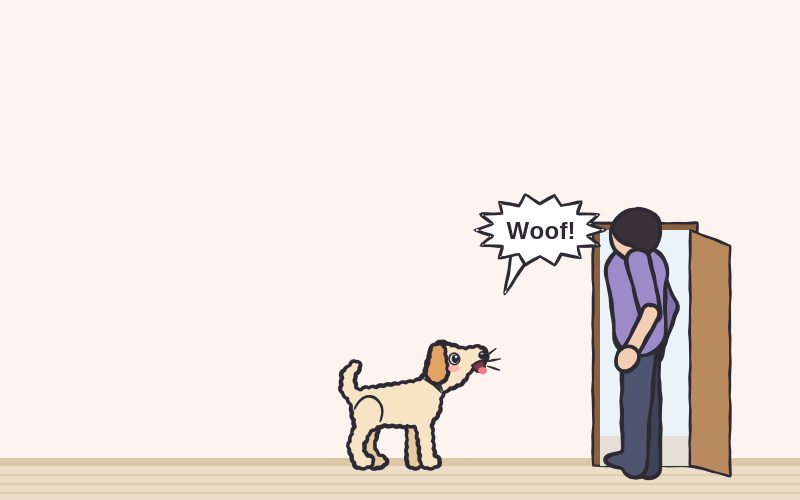
- The doorbell rings and your dog charges the door, barking nonstop
- Your friend has been sitting on the couch for 15 minutes and your dog is still barking
- She barks at every delivery driver — and is perfectly calm the moment they leave
- She’s so happy to see guests that she jumps, whines and barks all at once
- She’s fine with people she knows, but barks at anyone new
How your dog feels
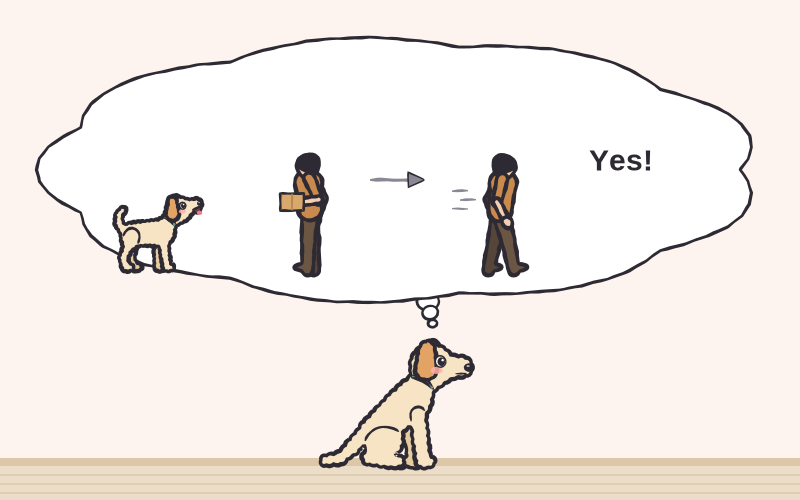
Your dog has no idea why people come to the house. Some dogs find it frightening or feel they have to guard their home; others are simply thrilled. The UK dog welfare charity Dogs Trust puts it plainly: dogs don’t behave this way toward visitors because they’re jealous or dominant.
Delivery drivers drop the parcel and leave. From your dog’s side, that looks like “I barked, and they went away.” They were leaving anyway — but she can’t know that. So she learns that barking works.
Even happy barking can tip over. When a very excited dog is held back on a leash or kept behind a gate, that excitement can quickly turn into frustration — which is why some dogs bark harder behind a barrier.
Telling her off while she barks doesn’t help. For a worried dog it raises the anxiety, and she learns that visitors mean being scolded — one more reason to fear them.
Which kind of barking is it? Read her body
The bark itself won’t tell you much. Watch her body just before and during the barking. Filming it on your phone helps — you can watch it later with your family or a trainer.
- Fearful: ears pulled back, tail tucked, lip-licking, body lowered, backing away — barking while retreating. → Meeting the visitor is not the goal. Give her distance and a place to escape to (see “If your dog is afraid of visitors” below).
- Guarding: stiff body, hackles up, a hard stare, a rush forward the moment the door opens. → Block her view of the door and windows so she gets fewer chances to bark, then teach “doorbell means mat.”
- Over-excited: loose, wiggly body, big tail wags, whining, jumping up — and she greets the family the same way when you come home. → Practice settling, and greeting with all four paws on the floor.
- Not sure, or a mix: when in doubt, keep her apart from visitors in another room. Dogs Trust’s rule is simple: “If in doubt, keep your dog out!”
Start today: a plan for visit days
Until training has caught up, the most important thing is to stop the bark-and-rush-the-door routine from happening. Every rehearsal makes the habit stronger and harder to change.
- Before guests arrive, make sure she’s had a good walk, a toilet break and her meal
- Find out when they’re coming. Shortly before, settle your dog in another room or behind a gate with a stuffed food toy or a chew. If she has no history of guarding food, scatter some kibble on the floor so she can sniff it out — sniffing and chewing are calming for most dogs
- Put a baby gate or a pen between the front door and your dog. Block windows where she can see people coming with blinds, curtains or frosted window film
- If she does meet guests, keep her on leash at first, so she can’t jump on them or rush at them
- Ask guests, at first, not to look at her, touch her or talk to her. Let your dog come over and sniff them in her own time — and if she moves away, they shouldn’t follow
- Let her out of the gated room or crate only once she has stopped barking — open it the moment she’s quiet, even for a second
- Cut down doorstep barking from deliveries: use a parcel locker or pick-up point, track the package and meet the driver outside, or put a note on the door asking people to phone instead of knocking or ringing
If a trainer came to your home: the first session and the first homework
Here is how we’d expect the first in-home session to go — one example, not a fixed script. With visitor barking, the trainer is the visitor, so they can see your dog’s reaction for themselves.
- Assessment: before the trainer arrives, your dog is already behind a gate or on leash. The trainer rings the bell and comes in, watching her body language (fearful, guarding or excited) and how long she takes to settle. If you have a video of a normal visit, you watch it together. If she growls or tries to bite, there’s no meet-and-greet practice — the trainer refers you to your vet or a behavior professional
- Today: you decide together how visit days will work — where the gate goes, what to ask guests — and write it on a note for the inside of the front door. Training starts with step 1 of Relaxing on a Mat: she steps onto the mat, and a treat lands on the mat
- Homework: on days with no visitors, mat practice twice a day, 3–5 minutes each. When guests do come, follow the visit-day plan — another room or behind the gate. No meet-and-greet practice yet
- Next visit: can she stay on her mat while a family member opens and closes the front door? Our rule of thumb: if she manages 8 out of 10, the next homework is family members playing the visitor and ringing the bell
Teaching “doorbell means mat” (on days with no visitors)
Teaching her what to do when people arrive works faster than trying to stop the barking. The ASPCA and Humane World for Animals both recommend teaching your dog to go to a set place and wait there when visitors come.
Raise the difficulty one thing at a time: the door opening, then the doorbell, then a person walking in. Our rule of thumb: move on when she gets the current step right 8 out of 10 times. If she struggles, go back a step.
- First, practice Relaxing on a Mat at a quiet time, with nobody coming. Put the mat away from the door but within sight of it — the ASPCA suggests a spot at least 8 feet (about 2.4 m) from the front door that can still see it; the doorway of a nearby room or her crate works too
- While she’s on the mat, a family member opens the front door a little. If she gets off, the door closes straight away. If she stays, a treat lands on the mat
- Next, a family member knocks softly or rings the bell from outside → “Mat” → a treat when she gets on. Recruit family and friends to play visitors and run plenty of practice visits
- With real guests: the bell rings, you say “Mat.” Let your guests in and ask them to sit down. Wait about a minute, then release her from the mat to say hello (the ASPCA’s routine). If she may jump up, keep the leash on
- For a happy greeter, make the hello a sit or a four-paws-on-the-floor greeting: while she sits, the guest can pet her; if she stands up or jumps, the guest takes a step back
- If she loves toys, keep a favorite one near the front door and encourage her to pick it up before she greets anyone — a dog with a toy in her mouth is less inclined to bark (ASPCA)
If your dog is afraid of visitors: meeting them is not the goal
For a dog who barks because she’s frightened, having guests hand her treats or bringing her close “so she gets used to it” backfires. Dogs Trust warns that making a worried dog “face their fear” could risk aggressive behavior.
- Before guests arrive, give her a stuffed food toy or a chew in another room. Over time she starts to link people coming round with good things
- When she does meet visitors, keep the group small and the visit short. Tell guests ahead of time not to approach her or fuss over her
- You deliver the treats — drop them gently on the floor near her, or toss them. Guests don’t hand-feed her
- If she chooses to move away, reward that choice — a scatter of treats or a chew in another room. Always leave her a way to retreat
- After a bad day, give her one to two quiet days with no visitors. Stress builds up, and a dog who is still wound up from yesterday reacts sooner today (Dogs Trust)
How quiet is quiet enough?
A bark or two to announce someone at the door is normal dog behavior — the RSPCA calls barking a completely normal form of communication. The goal isn’t a dog who never barks. It’s a dog who doesn’t keep barking, settles quickly, and doesn’t rush at your guests.
Nonstop barking that carries next door is a different matter, for your neighbors as well as your dog. In England, barking dogs are one of the noises councils investigate, and a council that finds a statutory nuisance must serve a notice requiring the noise to stop or be restricted. In the US it depends on where you live; New York City’s Noise Code, for example, allows enforcement when a dog’s barking is unreasonable and plainly audible from a nearby home for 10 minutes straight in the daytime, or 5 minutes at night. Check your local rules.
The missing core skill
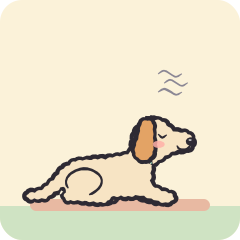 Core skill Settling Down Coming back down by herself after the doorbell or a visitor has wound her up. Relaxing on a Mat builds it.
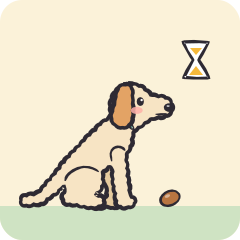 Core skill Impulse Control Pausing for a breath instead of rushing the door or jumping on guests.
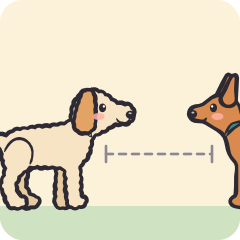 Core skill Confidence Staying relaxed when a stranger walks into the house. If her barking is fearful, this is the foundation that matters most.
Exercises
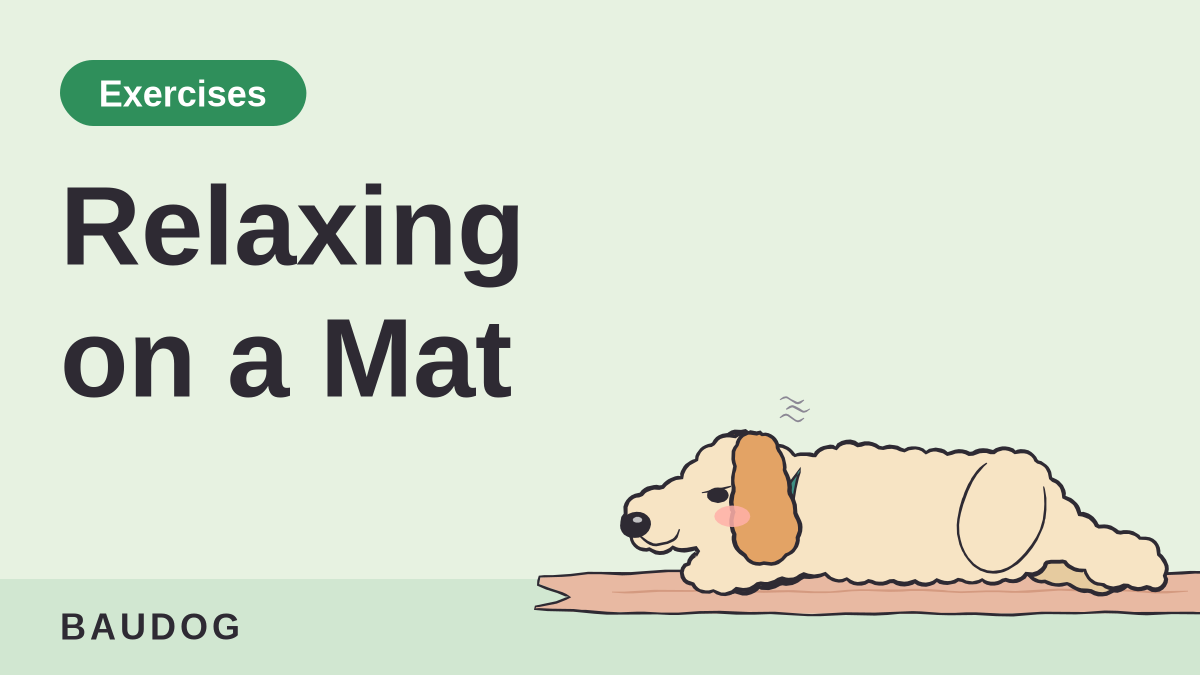
- ExerciseRelaxing on a Mat: How to Teach Your Dog to SettleDoable at home (Steps 1–4 at home)When she steps onto the mat, she lies down on her own and rolls onto one hip to relax.Read →
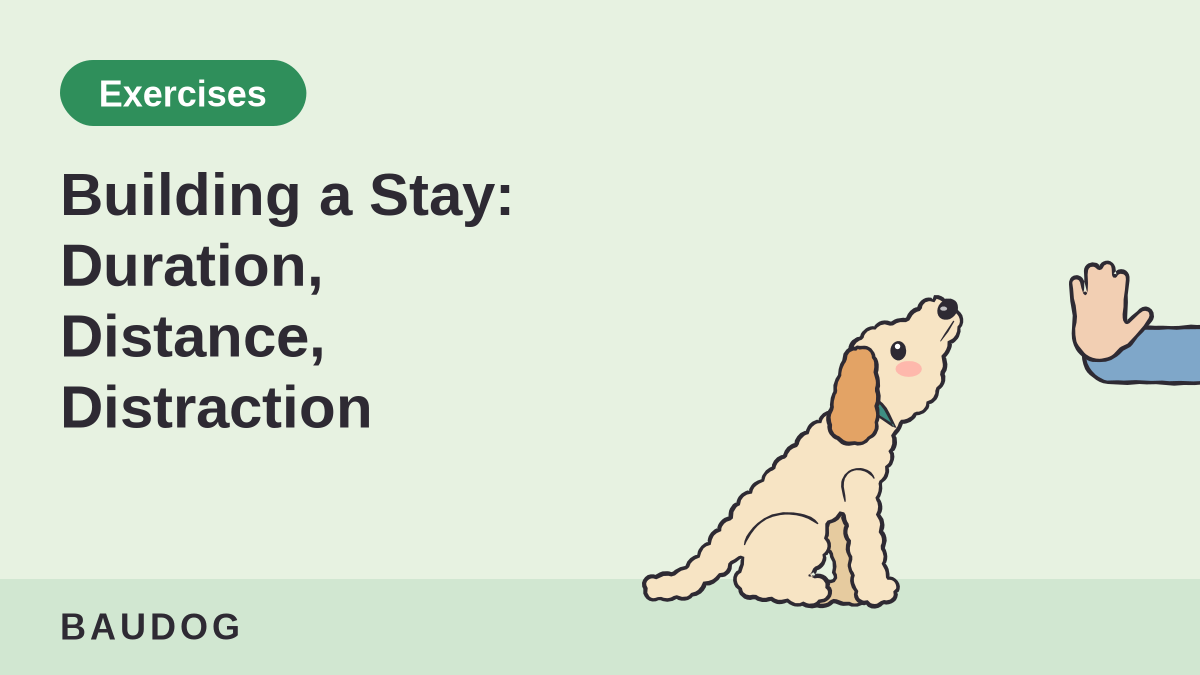
- ExerciseBuilding a Stay: Duration, Distance, Distraction — One at a Time, Up to the Front Door and GuestsDoable at home (Steps 1–3 at home)Your dog holds a sit or down from “Stay” until “Free” — with duration, distance and distraction each built up one at a time.Read →
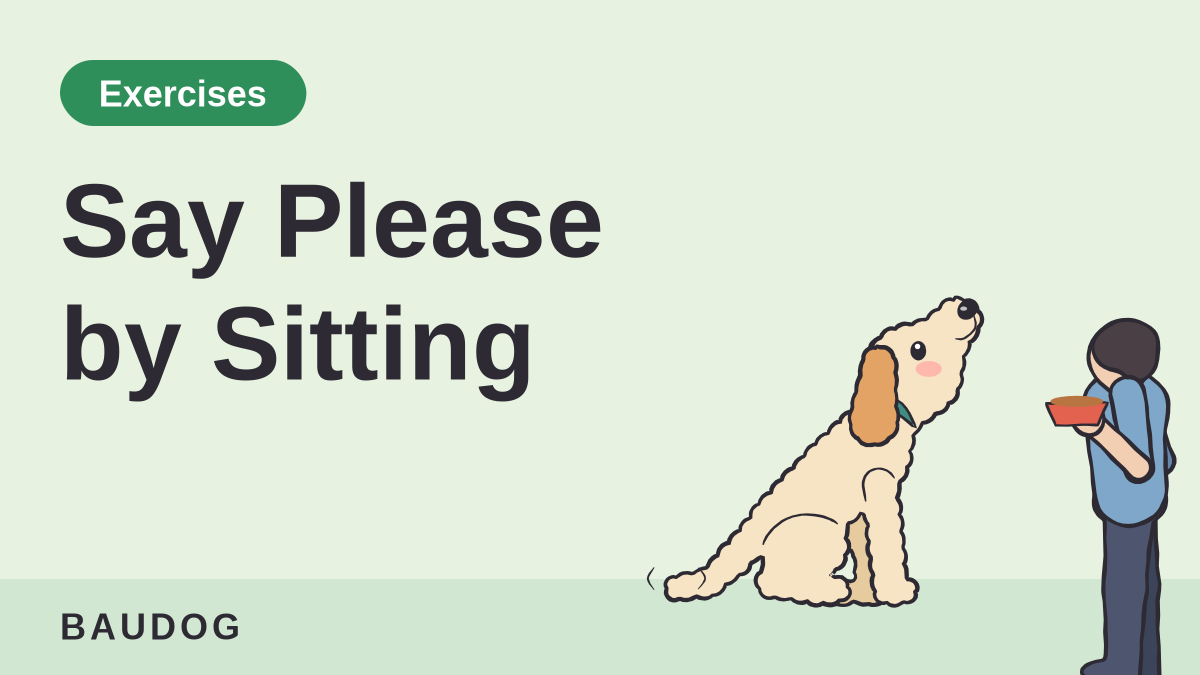
- ExerciseSay Please by SittingDoable at home (Steps 1–3 at home)When she wants something, she sits and waits — on her own, without being asked.Read →
- ExerciseFour on the Floor: Teaching Your Dog to Greet People PolitelyDoable at home (Steps 1–2 at home)When someone comes up to her, your dog greets them with all four paws on the floor (she doesn’t need to sit).Read →
- ExerciseLook at That (LAT): The Game That Helps Reactive Dogs Stay Calm Around Dogs and PeopleStart at home, finish outside (Step 1 at home)She can look at the thing that worries her without barking, and turn back to you on her own.Read →
In the moment: do / don’t
Do
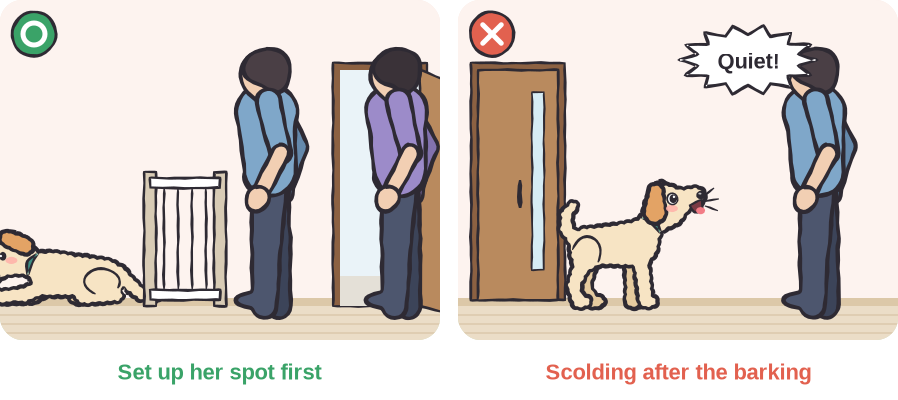
- Settle her in another room or behind a gate with a food toy before guests arrive
- Ask guests not to look at, touch or talk to her at first
- Open the gate or crate only once she’s quiet
- Reward calm moments quietly — drop a treat on the floor
Don’t
- Shout “Quiet!” — it adds to the fear and the excitement
- Let guests touch a frightened dog or hand-feed her
- Let her out from behind the gate while she’s barking
- Use anti-bark collars that shock, beep or spray
When to see a professional
- She has growled, bared her teeth, or tried to bite (or bitten). Stop any meet-and-greet practice, keep her in another room when people visit, and talk to your vet or a qualified behavior professional
- She has suddenly started barking at visitors, or at people she used to be fine with. Pain or another health problem can be behind a change like this — see your vet first
- If she bites someone: give the person your name and contact details, and encourage them to wash the wound with soap and water and get medical advice. In some places a bite must be reported and your dog watched for a set period — in New York City, for example, a healthy dog who has bitten someone is watched at home for 10 days. Check your local rules
Go to the root
Don’t stop at the quick fix. Growing the skill underneath makes other problems lighter too.
- Core skill Settling Down
- ExerciseRelaxing on a Mat: How to Teach Your Dog to SettleDoable at home (Steps 1–4 at home)Read →
- ExerciseBuilding a Stay: Duration, Distance, Distraction — One at a Time, Up to the Front Door and GuestsDoable at home (Steps 1–3 at home)Read →
- ExerciseSay Please by SittingDoable at home (Steps 1–3 at home)Read →
Sources
- Dogs Trust — Dog aggression towards visitors: causes and what to do
- ASPCA — Barking
- Humane World for Animals (formerly the Humane Society of the United States) — How to get your dog to stop barking
- Peninsula Humane Society & SPCA — Helping a dog warm up to visitors in the home
- RSPCA (UK) — How to stop your dog barking too much
- MSD Veterinary Manual (for veterinarians) — Behavior Problems of Dogs
- AVSAB — Position Statement on Humane Dog Training (2021)
- AVSAB — Position Statement on the Use of Dominance Theory in Behavior Modification of Animals
- GOV.UK — Noise nuisances: how councils deal with complaints
- NYC Department of Environmental Protection — A Guide to New York City’s Noise Code (PDF)
- NHS (UK) — Animal and human bites
- NYC Health — Rabies